1. Introduction to Biotechnology
Listen up, junior! If you think Biotechnology is just some high-tech sci-fi movie stuff, think again. From your morning dahi (curd) to life-saving DNA vaccines, it’s all biotech, yaar!. Traditionally, it's just using microbes to make bread or wine, but modern biotech is like being a genetic architect. The European Federation of Biotechnology (EFB) defines it as the integration of natural science and organisms (or molecular analogues) for products and services. Basically, it's about making nature work for us in a smarter way!
NEET Checkpoint:
Does making curd at home count as biotechnology?
(a) No, because no machines are used
(b) No, because it is a natural process
(c) Yes, because microorganisms are used to produce a useful product
(d) Yes, because it involves genetic engineering
✅ Answer: (c) Yes—In a broad sense, it is a microbe-mediated biotechnological process.
There are two main "fundas" or principles you must know:
1. Genetic Engineering: This is where we play with the "chemistry" of DNA or RNA to change the host's look and feel (phenotype).
2. Bioprocess Engineering: Think of this as giving your microbes a five-star, sterile "VIP" treatment so they can grow in massive quantities to produce antibiotics or enzymes without any "kachra" (contamination).
NEET Checkpoint:
Which technique allows the isolation of only desirable genes?
(a) Hybridization
(b) Gene cloning
(c) Genetic engineering
(d) Tissue culture
✅ Answer: (c) Genetic Engineering—It overcomes the limitations of traditional hybridisation which often includes undesirable genes.
Imagine you are a captain picking a cricket team. Genetic engineering is like picking only the star batsman (the desired gene) and using a "scooter" or vector (like a plasmid) to drop him into the stadium (the host cell). To keep the game fair, we use restriction enzymes (molecular scissors) to cut the DNA at just the right spot.
NEET Checkpoint:
What are the three critical research areas of biotechnology?
(a) Genetics, Ecology, and Evolution
(b) Microbiology, Immunology, and Pathology
(c) Gene therapy, cloning, and bioinformatics
(d) Providing the best catalyst, creating optimal conditions, and downstream processing
✅ Answer: (d) 1. Best catalyst, 2. Optimal conditions, 3. Downstream processing.
But wait! We can't just play God without rules. Organizations like GEAC monitor the safety and ethics of GMOs to ensure we aren't messing up the ecosystem or committing biopiracy.
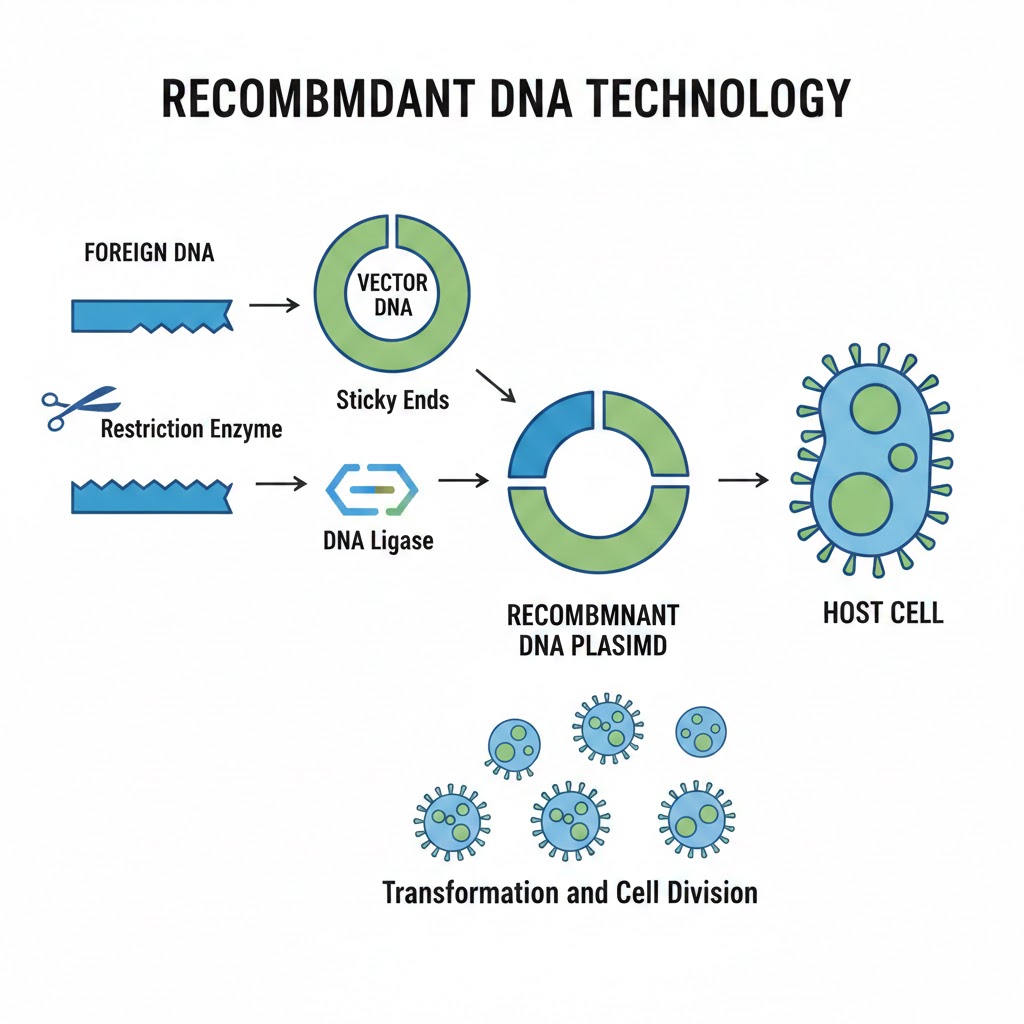
Figure below:
A clear diagram showing the steps of recombinant DNA technology: cutting foreign DNA and vector DNA with the same restriction enzyme, joining them with ligase, and transforming the host cell.
Practice Questions:
1. According to the EFB, biotechnology encompasses:
(a) Only traditional views
(b) Only modern molecular biotechnology
(c) Both traditional and modern molecular biotechnology
(d) Only in vitro fertilisation
✅ Answer: (c) — The EFB definition integrates both views for products and services.
2. Maintenance of a sterile environment in chemical engineering for growing desired microbes is:
(a) Genetic engineering
(b) Bioprocess engineering
(c) Downstream processing
(d) Gene therapy
✅ Answer: (b) — This ensures large-scale manufacture of products like vaccines and enzymes.
Key Takeaway
- Biotechnology = Traditional (Curd/Bread) + Modern (GMOs, Gene Synthesis).
- EFB Definition: Integration of natural science + organisms/cells/molecular analogues.
- Core Principles: Genetic Engineering (DNA alteration) & Bioprocess Engineering (Sterile large-scale production).
- Research Pillars: Best catalyst, optimal conditions, and downstream purification.
2. Principles of Modern Biotechnology
Did you know modern biotech isn't just about mixing things in a lab? It stands on two main pillars that changed the game. First is Genetic Engineering, where we literally "hack" the chemistry of genetic material ($DNA$ or $RNA$) to introduce it into host organisms and change their phenotypes. Second is Bioprocess Engineering. Think of this like a high-end, super-clean kitchen—it's about maintaining sterile (microbial contamination-free) conditions so we can grow only the "good" microbes in massive quantities to make vaccines and enzymes.
NEET Checkpoint:
Which technique focuses on maintaining a sterile environment for the large-scale manufacture of biotechnological products?
(a) Genetic engineering
(b) Bioprocess engineering
(c) Hybridisation
(d) Elution
✅ Answer: (b) — Bioprocess engineering ensures only desired cells grow by keeping out unwanted "intruder" microbes.
Now, why not just use traditional hybridisation? In old-school breeding, you often get a package deal: you get the good genes, but some "undesirable" genes tag along for the ride. Genetic Engineering is like picking only the star batsman for your cricket team instead of the whole village! It allows us to isolate and insert only the desirable genes into a target organism.
NEET Checkpoint:
What is the major limitation of traditional hybridisation procedures?
(a) They cannot be used in plants
(b) They produce genetically identical organisms
(c) They allow transfer of undesirable genes along with desirable genes
(d) They are very expensive
✅ Answer: (c) It often leads to the inclusion and multiplication of undesirable genes along with the desired ones.
But wait, you can't just throw a piece of $DNA$ into a cell and expect it to copy itself. It needs a "boarding pass" called the Origin of Replication ($ori$). This is a specific sequence responsible for starting replication. If the alien $DNA$ isn't linked to an $ori$, it’s just a piece of trash that won't multiply in the host.
NEET Checkpoint:
A piece of alien $DNA$ needs to be linked to which sequence to multiply in a host?
(a) Origin of replication (ori)
(b) Restriction site
(c) Promoter sequence
(d) Terminator sequence
✅ Answer: (a) Origin of Replication ($ori$) — This sequence is the "start button" for $DNA$ replication.
Practice Question:
Genetic engineering is superior to traditional hybridisation because:
(a) It is faster.
(b) It preserves all genetic information of the parent.
(c) It allows the isolation and introduction of only desirable genes.
(d) It does not require a host organism.
✅ Answer: (c) — Genetic engineering overcomes the limitation of multiplying undesirable genes.
Key Takeaway:
Modern Biotech = Genetic Engineering (modifying $DNA$ chemistry) + Bioprocess Engineering (sterile large-scale growth). Remember: No $ori$, no multiplication!.
3. The Birth of Recombinant DNA Technology
Listen up, junior! Ever wondered how we started "editing" life itself? It all began in 1972 with two legends: Stanley Cohen and Herbert Boyer. Think of them as the original bio-hackers who figured out how to cut and paste DNA like a pro. Boyer found enzymes that cut DNA leaving "sticky ends," while Cohen was the master of plasmids—those tiny, circular DNA ringlets that live in bacteria.
NEET Checkpoint:
Who constructed the first recombinant DNA molecule?
(a) Watson and Crick
(b) Stanley Cohen and Herbert Boyer
(c) Meselson and Stahl
(d) Alec Jeffreys
✅ Answer: (b) Stanley Cohen and Herbert Boyer — They did this game-changing work in 1972!
Here’s the breakdown of their big experiment:
1. The Cut: They isolated a gene for antibiotic resistance from a plasmid of the bacterium Salmonella typhimurium. They used "molecular scissors"—restriction enzymes—to snip the DNA at specific spots.
2. The Paste: They linked this gene to a vector (another plasmid) using DNA ligase. This "glue" joins the cut DNA ends together.
3. The Result: This created the first recombinant DNA (rDNA) in vitro.
NEET Checkpoint:
What acts as the "molecular scissors" in genetic engineering?
(a) DNA ligase
(b) RNA polymerase
(c) Restriction enzymes
(d) DNA polymerase
✅ Answer: (c) Restriction enzymes — These enzymes cut DNA at specific locations.
The Indian Context Fun: Imagine you’re at a busy pani puri stall. The vendor (the vector) takes a spicy potato filling (the gene of interest) and stuff it into the puri. Once it’s inside you (the host, like $E. coli$), it multiplies and makes you want more! This multiplication of the gene in a host is called cloning.
NEET Checkpoint:
Which bacterium was used as the host for the first cloning experiment?
(a) Bacillus subtilis
(b) Escherichia coli
(c) Agrobacterium tumefaciens
(d) Pseudomonas aeruginosa
✅ Answer: (b) Escherichia coli — It is closely related to Salmonella, allowing the rDNA to replicate.
Practice Questions:
1. The autonomously replicating circular extra-chromosomal DNA used in the first rDNA construction was taken from:
(a) $E. coli$
(b) Salmonella typhimurium
(c) Agrobacterium
(d) Bacteriophage
✅ Answer: (b)Salmonella typhimurium - The antibiotic resistance gene was originally part of a native plasmid in Salmonella typhimurium.
2. The enzyme responsible for joining the antibiotic resistance gene with the plasmid vector is:
(a) DNA Polymerase
(b) Restriction Endonuclease
(c) DNA Ligase
(d) Exonuclease
✅ Answer: (c) DNA Ligase - DNA ligase acts on cut DNA molecules to join their ends.
Key Takeaway
- First rDNA: 1972 by Cohen & Boyer.
- Gene Source: Salmonella typhimurium plasmid.
- Tools: Restriction Enzymes (Scissors) + DNA Ligase (Glue).
- Host for Cloning: $E. coli$.
4. Tools of rDNA: Restriction Enzymes
Listen up, junior! To build a recombinant DNA molecule, you first need the right "molecular scissors" to cut the DNA. These are restriction enzymes, which belong to a bigger family called nucleases. Now, don't get confused between the two types: exonucleases trim the DNA by removing nucleotides from the ends, while endonucleases make cuts at very specific positions inside the DNA. Think of it like a local tailor: an exonuclease just trims the hem of your jeans, but an endonuclease is like a master designer who cuts the fabric only where the pattern is marked!
NEET Checkpoint:
Which was the first restriction endonuclease to be isolated and characterised?
(a) EcoRI
(b) Hind II
(c) BamHI
(d) Pst I
✅ Answer: (b) Hind II — Arre, remember! While EcoRI is famous, Hind II was the first one, isolated in 1963.
Naming these enzymes follows a strict "funda." The first letter comes from the genus, and the next two letters from the species of the bacterium. For example, in EcoRI, ‘E’ is for Escherichia and ‘co’ is for coli. The ‘R’ represents the strain (RY 13), and the Roman numeral ‘I’ tells us the order in which it was isolated.
These enzymes are super picky—they only cut when they find a specific recognition sequence, which is usually a palindrome. In DNA, a palindrome means the sequence reads the same on both strands in the $5'\rightarrow3'$ direction. For example, EcoRI looks for $5'\text{--GAATTC--}3'$. It’s like how the word "NAMAN" reads the same forward and backward!
NEET Checkpoint:
In the name EcoRI, what does the Roman numeral 'I' indicate?
(a) The strain of the bacterium
(b) The genus
(c) The order of isolation
(d) The species
✅ Answer: (c) The order of isolation — Don't stress, it just means it was the first enzyme found in that specific strain!
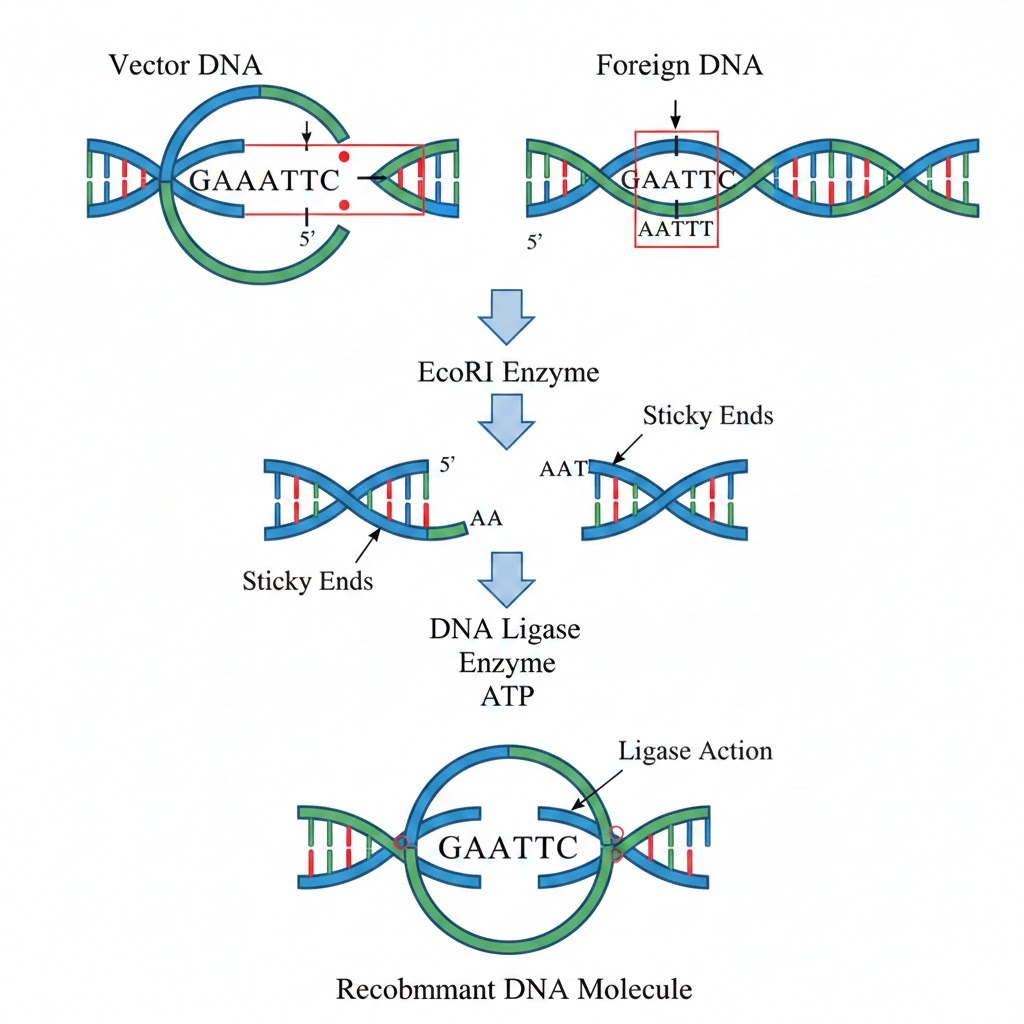
When these enzymes cut, they often leave overhanging, single-stranded portions called sticky ends. These are named "sticky" because they easily form hydrogen bonds with their complementary counterparts. This "stickiness" is the secret sauce that helps the enzyme DNA ligase join the fragments together perfectly.
Figure below:
A clear diagram showing the action of EcoRI on vector and foreign DNA, highlighting the specific GAATTC sequence, the formation of overhanging sticky ends, and the final joining of fragments by DNA ligase to form recombinant DNA.
NEET Checkpoint:
Why are "sticky ends" so important in rDNA technology?
(a) They prevent DNA from breaking
(b) They help DNA move in gel electrophoresis
(c) They facilitate the action of DNA ligase
(d) They identify the origin of replication
✅ Answer: (c) They facilitate the action of DNA ligase — Exactly! The hydrogen bonding between these ends makes the ligase's job much easier.
Practice Questions:
1. A restriction enzyme cuts DNA a little away from the centre of the palindrome sites. This results in:
(a) Blunt ends
(b) Sticky ends
(c) No ends
(d) Circular DNA
✅ Answer: (b) Sticky ends — These are the overhanging stretches left when the cut is slightly off-centre.
2. Today, we know more than how many restriction enzymes?
(a) 230
(b) 6
(c) 900
(d) 1963
✅ Answer: (c) 900 — These have been isolated from over 230 different strains of bacteria.
Key Takeaway
- Exonucleases: Cut ends; Endonucleases: Cut specific internal sites.
- Naming: Genus (1st letter) + Species (next 2) + Strain + Order of isolation.
- Recognition Site: Specific palindromic sequences (e.g., $5'\text{--GAATTC--}3'$ for EcoRI).
- Sticky Ends: Facilitate joining by DNA ligase.
5. Separation and Isolation of DNA Fragments
So you've used your molecular scissors to snip the DNA into pieces. But now they are all mixed up like a messy pile of clothes after a festive sale! To find your specific "brand," we use a technique called Gel Electrophoresis.
NEET Checkpoint:
Why do DNA fragments move toward the anode during electrophoresis?
(a) DNA has a positive charge
(b) Agarose gel is positively charged
(c) DNA is negatively charged due to its phosphate backbone
(d) Anode attracts all biomolecules
✅ Answer: (c) Because DNA is negatively charged — Opposite charges attract, simple physics, yaar!.
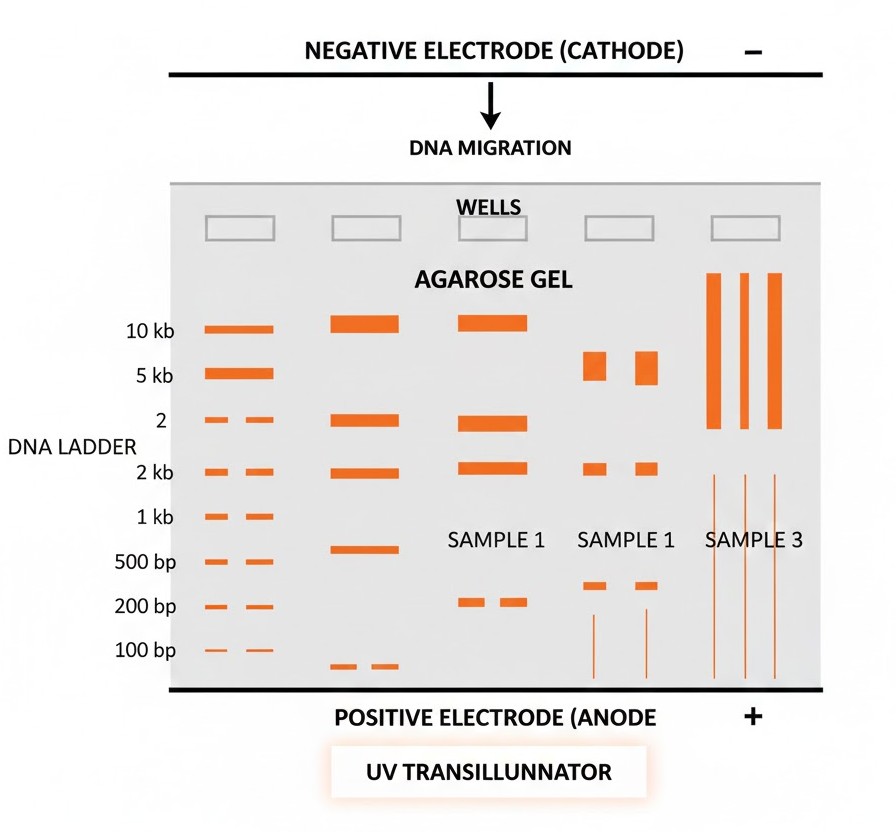
Since DNA fragments are negatively charged, we force them to move through a matrix of agarose (a natural polymer extracted from seaweeds) towards the anode (positive electrode). Think of it like a local railway station rush; the smaller, leaner folks (small DNA fragments) weave through the crowd (the agarose sieving effect) much faster than the bulky ones!. Thus, the smaller the fragment size, the farther it travels.
NEET Checkpoint:
What is the most commonly used matrix in electrophoresis today?
(a) Polyacrylamide gel
(b) Cellulose acetate
(c) Agarose gel
(d) Starch gel
✅ Answer: (c) Agarose gel — It is a natural polymer from seaweeds that provides the necessary sieving effect.
Notice this: you can't actually see these fragments in normal light—they are invisible!. To spot them, we stain the gel with a compound called ethidium bromide and expose it to UV radiation, which reveals bright orange coloured bands. The final step is elution, where we cut out the specific DNA band from the agarose gel and extract it from the gel piece.
Figure below:
A clear diagram of a typical agarose gel electrophoresis. Show wells at the top (negative end) and DNA bands migrating toward the bottom (positive anode). Illustrate smaller fragments further from the wells and larger fragments closer to the wells, with bright orange bands representing the DNA.
NEET Checkpoint:
What is the process of extracting separated DNA bands from the gel called?
(a) Denaturation
(b) Elution
(c) Hybridization
(d) Ligation
✅ Answer: (b) Elution — This purified DNA is then ready to be joined with cloning vectors.
Practice Questions:
1. Which of the following is required to visualise DNA on an agarose gel?
(a) Visible light and ethidium bromide
(b) Infrared light and chilled ethanol
(c) UV radiation and ethidium bromide
(d) UV radiation and methylene blue
✅ Answer: (c) — You cannot see pure DNA in visible light; it requires ethidium bromide staining and UV exposure to appear as orange bands.
2. In gel electrophoresis, DNA fragments are separated based on their:
(a) Positive charge
(b) Size
(c) Colour
(d) Ability to bind to ligase
✅ Answer: (b) — While the electric field moves them, the agarose gel acts as a sieve to resolve them according to their size.
Key Takeaway
- DNA Charge: Negatively charged, moves to the positive anode.
- Matrix: Agarose (from seaweeds) provides the sieving effect.
- Visualisation: Ethidium bromide + UV radiation = Bright orange bands.
- Elution: The extraction of DNA fragments from the gel.
6. Tools of rDNA: Cloning Vectors
Listen up, junior! Think of cloning vectors as the delivery scooters of the molecular world. Plasmids and bacteriophages are our top choices because they replicate independently in bacteria. Phages are especially cool because their high copy number means you get heaps of DNA copies. It's like having a viral video that just won't stop being shared!
To make a vector work, you need the 'ori' (Origin of Replication). This isn't just the starting line; it also controls the copy number—basically how many photocopies of your gene the cell makes.
NEET Checkpoint:
If you want many copies of your target DNA, what should you look for in a vector?
(a) Selectable marker
(b) Restriction site
(c) High copy number
(d) Promoter sequence
✅ Answer: (c) A vector with an 'ori' that supports a high copy number.
Then there are selectable markers, like the ampicillin ($amp^R$) or tetracycline ($tet^R$) resistance genes. These help us kick out the 'non-transformants'—bacteria that didn't take up any plasmid. It’s like a VIP pass at a stadium; no pass, no entry!
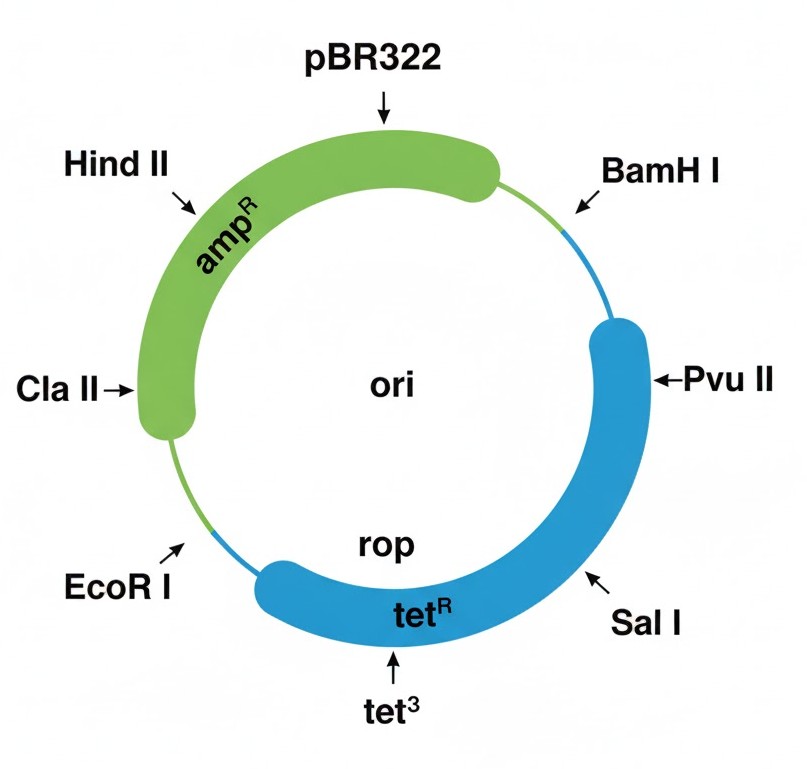
Cloning sites are the specific spots where we 'glue' our alien DNA. In pBR322, if you insert DNA at the BamH I site, you actually break the $tet^R$ gene. This is insertional inactivation.
NEET Checkpoint:
A recombinant plasmid is inserted into the $\beta$-galactosidase gene. What colour will the colonies be on a chromogenic substrate?
(a) Blue
(b) White
(c) Red
(d) Colourless and invisible
✅ Answer: (b) White — The enzyme is inactivated by the insert, so it can't produce blue colour.
NEET Checkpoint:
Why are antibiotic markers sometimes considered 'cumbersome'?
(a) They reduce the replication of plasmids
(b) They require killing or growing cells on antibiotic-containing media
(c) They cannot be used in bacteria
(d) They do not help in selection
✅ Answer: (b) They require simultaneous plating on two different antibiotic plates to identify recombinants.
Figure below:
A clear diagram of E. coli cloning vector pBR322 showing restriction sites (Hind III, EcoR I, BamH I, Sal I, Pvu II, Pst I, Cla I), ori, rop, and antibiotic resistance genes $amp^R$ and $tet^R$.
Practice Question:
Which of the following is NOT a feature required to facilitate cloning into a vector?
(a) Origin of replication
(b) Selectable marker
(c) Recognition sites
(d) High molecular weight
✅ Answer: (d) — Vectors need specific functional sequences like ori and markers, not just bulk.
Key Takeaway
- Ori: Starts replication and sets the copy count.
- Markers: Help distinguish transformants (e.g., $amp^R$).
- Insertional Inactivation: Inactivating a gene (like $\beta$-galactosidase) helps identify recombinants by colour.
7. Vectors for Plants and Animals
Listen up, juniors! Ever wondered how we convince a plant or animal cell to take in foreign DNA? We don't just "ask" nicely; we use experts who have been doing this for ages—pathogens!
Take Agrobacterium tumifaciens, the "Natural Genetic Engineer" of the plant world. This bacterium is a pathogen to several dicot plants. It used to be a bit of a bully, delivering a piece of DNA called $T-DNA$ to transform normal plant cells into tumours. These tumours then produced chemicals the bacteria needed. But don't stress, yaar! Scientists have now "disarmed" the Ti-plasmid (Tumor inducing plasmid). It's no longer pathogenic but still uses its natural "taxi service" to deliver our genes of interest into plants.
NEET Checkpoint:
Which vector is used to deliver genes specifically into dicot plants?
(a) $pBR322$
(b) Retrovirus
(c) Ti-plasmid
(d) Phagmid
✅ Answer: (c) Ti-plasmid — It’s the natural expert for plant transformation!
Think of the Ti-plasmid like a local delivery rickshaw. It knows every lane in the plant "colony." We just replaced the "bad cargo" (tumour genes) with our "good parcels" (desirable genes). [Relatable Example]
For animals, we look at Retroviruses. These guys naturally transform normal cells into cancerous ones. By disarming them, we use their entry skills to deliver healthy genes into animal cells instead.
NEET Checkpoint:
In animal biotechnology, Retroviruses are:
(a) Used to cause cancer
(b) Disarmed to deliver desirable genes
(c) Used as selectable markers
(d) Isolated from plants
✅ Answer: (b) Disarmed to deliver desirable genes — We’ve turned a villain into a hero!
NEET Checkpoint:
What is the specific DNA piece transferred by Agrobacterium?
(a) $ori$
(b) $T-DNA$
(c) $rop$
(d) Antibiotic resistance gene
✅ Answer: (b) $T-DNA$ — This is the "Transfer DNA" that does the magic.
It's all about turning "foes" into "friends" to work for human interest. Once the gene is ligated into these clever vectors, it’s transferred to the host where it multiplies.
Practice Questions:
1. The Ti-plasmid used in plant genetic engineering is derived from:
(a) Escherichia coli
(b) Salmonella typhimurium
(c) Agrobacterium tumifaciens
(d) Bacillus thuringiensis
✅ Answer: (c) is correct as Agrobacterium is the natural source of the Ti-plasmid used for plants.
2. Disarmed retroviruses are used to deliver genes into:
(a) Dicot plants
(b) Animal cells
(c) Bacteria
(d) Fungi
✅ Answer: (b) is correct; retroviruses are the preferred disarmed vectors for animal hosts.
Key Takeaway
- Plants: Agrobacterium tumifaciens uses a disarmed Ti-plasmid to deliver $T-DNA$.
- Animals: Retroviruses are disarmed to serve as delivery tools for desirable genes.
- Concept: Pathogens are modified into useful vectors by removing their harmful (pathogenic) traits.
8. The Competent Host and Transformation
Hey there, future doctors! Ever tried pushing a thread through a tiny needle? Tough, right? Now imagine trying to push DNA through a cell membrane. Since DNA is a hydrophilic molecule, it simply refuses to pass through lipid-rich membranes on its own. We have to make the host "competent" (basically, giving it a VIP pass) to accept our recombinant DNA. Let's clear up this funda!
First up is Chemical Competence. We treat bacteria with a specific concentration of a divalent cation, like Calcium ($Ca^{2+}$). This increases the efficiency by which DNA enters the bacterium through pores in its cell wall. Then comes the Heat Shock Method: we chill the cells on ice with the DNA, hit them with a quick burst of $42^{\circ}C$, and slap them back on ice. It’s like jumping into a hot shower after a cold Delhi winter morning—the "shock" forces the DNA in!.
NEET Checkpoint:
Why can't DNA pass through the cell membrane naturally?
(a) It is hydrophobic
(b) It is too small
(c) It is hydrophilic
(d) It is negatively charged
✅ Answer: (c) It is hydrophilic — Arre, remember! Hydrophilic molecules hate lipids, so they can't just slide through the membrane.
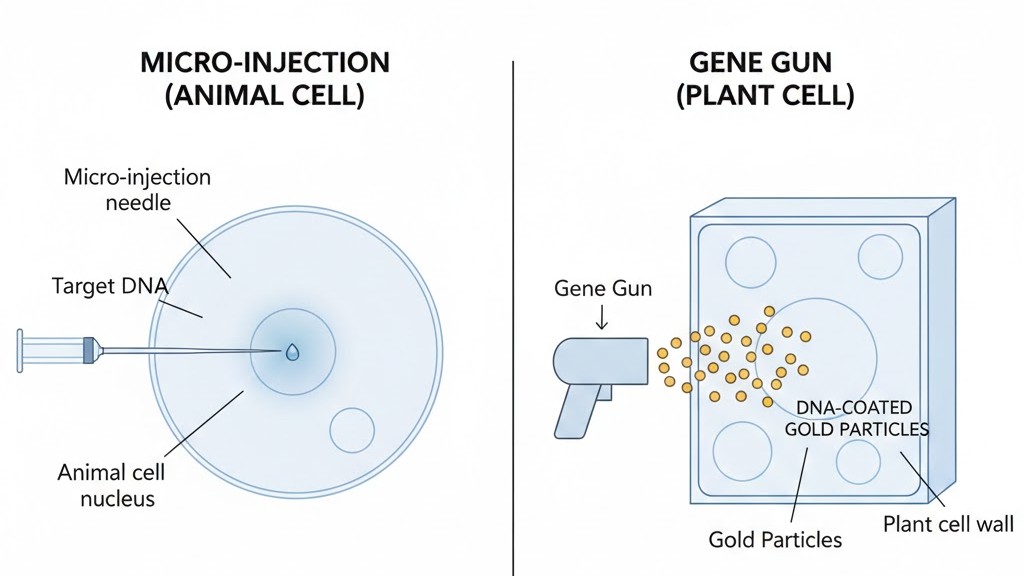
For those fancy animal cells, we use Micro-injection, where recombinant DNA is directly injected into the nucleus. It’s as precise as a Dhoni helicopter shot! For plants, we use Biolistics (or the Gene Gun), bombarding cells with high-velocity micro-particles of gold or tungsten coated with DNA.
NEET Checkpoint:
Which metals are used in the Biolistics method for plant cells?
(a) Iron or Nickel
(b) Copper or Aluminum
(c) Silver or Platinum
(d) Tungsten or Gold
✅ Answer: (d) Gold or Tungsten — These act as the "bullets" to carry DNA into the plant cell.
NEET Checkpoint:
What is the specific temperature for the 'Heat Shock' step?
(a) 37°C
(b) 50°C
(c) 42°C
(d) 60°C
✅ Answer: (c) $42^{\circ}C$ — Don't get confused with body temp; it's exactly $42^{\circ}C$ to facilitate uptake.
Figure below:
A clear diagram showing a micro-injection needle entering an animal cell nucleus and a gene gun bombarding a plant cell with gold particles.
Practice Question:
Which method is specifically used to transform animal cells by injecting DNA into the nucleus?
(a) Biolistics
(b) Heat Shock
(c) Micro-injection
(d) Disarmed pathogens
✅ Answer: (c) Micro-injection is the direct method for animal cell nuclei, while Biolistics is for plants.
Key Takeaway
- Bacteria: $Ca^{2+}$ + Heat Shock ($42^{\circ}C$).
- Animals: Micro-injection (Direct to nucleus).
- Plants: Biolistics/Gene Gun (Gold/Tungsten).
- Others: Disarmed pathogen vectors.
9. Processes: Isolation and Fragmentation
Listen up, junior! If you want to play around with DNA, you can't just ask the cell to hand it over nicely. You’ve got to get your hands dirty and break things open. Think of a cell like a tightly packed samosa: to get to the spicy filling (the DNA), you first have to break the crispy outer crust!.
Depending on who you’re dealing with, you need the right "molecular hammer." For bacteria, we use lysozyme; for plants, it’s cellulase; and for fungi, we use chitinase. Once the cell is smashed, the DNA is still a mess, mixed with RNA and proteins. We clean it up using ribonuclease (to kick out the RNA) and protease (to digest those pesky proteins).
NEET Checkpoint:
Which enzyme is used to release DNA from a fungal cell?
(a) Restriction endonuclease
(b) Lyticase / Chitinase
(c) DNA ligase
(d) RNA polymerase
✅ Answer:(b) Chitinase — Because the fungal cell wall is made of chitin, and this enzyme breaks it down!
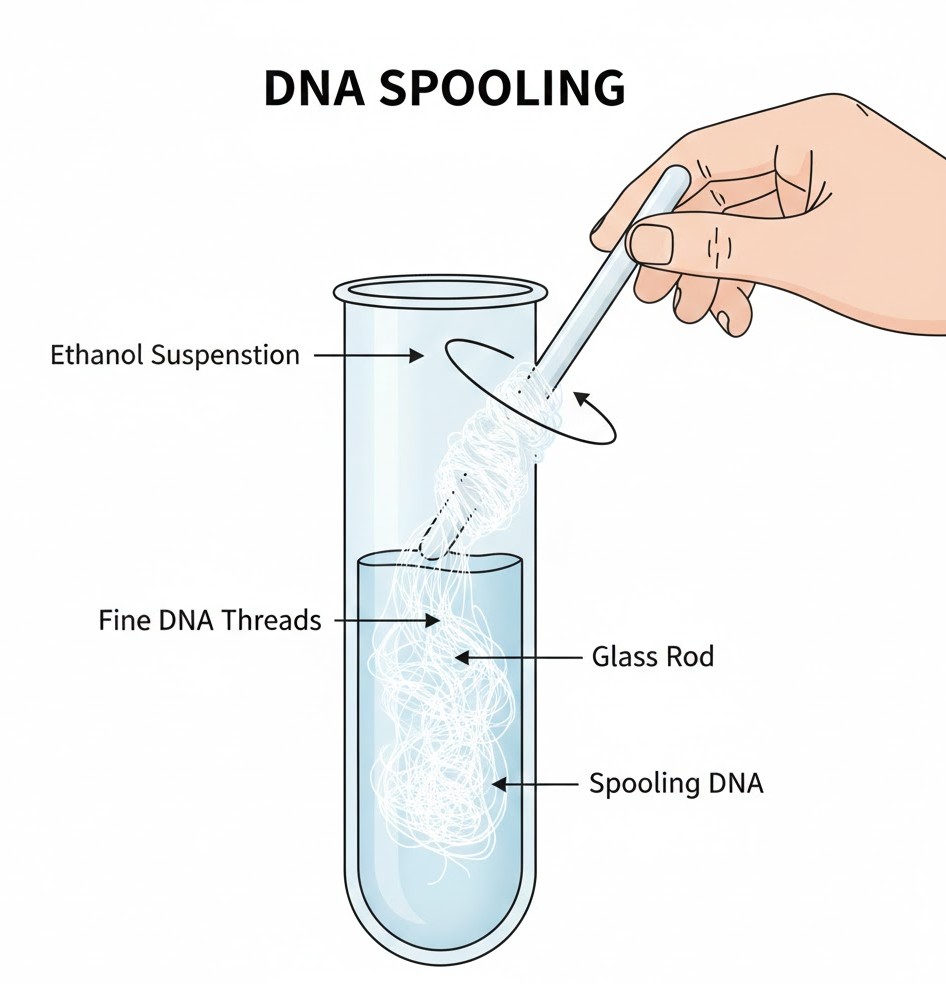
After all that cleaning, how do we actually see the DNA? Here’s the trick: we add chilled ethanol. Suddenly, the purified DNA precipitates out as fine threads that you can actually "spool" out with a glass rod!.
Figure below:
A clear diagram showing the collection of fine DNA threads from a suspension in a test tube using a glass rod, representing the process of spooling.
Next, we snip that long thread into pieces using restriction endonucleases. Since DNA is a negatively charged molecule, we check our progress using agarose gel electrophoresis, where the fragments run towards the anode (positive electrode).
NEET Checkpoint:
In a gel, which DNA fragments move the farthest from the wells?
(a) Large fragments
(b) Medium fragments
(c) Small fragments
(d) All fragments move the same distance
✅ Answer: (c) Smaller fragments — The agarose gel acts like a sieve; smaller pieces zip through faster and further!
NEET Checkpoint:
What is the specific role of chilled ethanol in DNA isolation?
(a) To digest the cell wall
(b) To precipitate DNA
(c) To break RNA contamination
(d) To dissolve DNA
✅ Answer: (b) Precipitation — It makes the purified DNA insoluble so it can be collected as fine threads.
Practice Questions:
1. Which of the following is the correct sequence of steps in Recombinant DNA technology?
(a) Fragmentation → Isolation → Ligation → Transformation
(b) Isolation → Fragmentation → Isolation of desired fragment → Ligation
(c) Ligation → Isolation → Fragmentation → Transformation
(d) Fragmentation → Ligation → Isolation → Culturing
✅ Answer: (b) — You must first isolate the DNA, then cut it (fragmentation), find the piece you like, and paste it (ligation).
2. To remove protein contamination during DNA purification, we use:
(a) Lysozyme
(b) Ribonuclease
(c) Protease
(d) Cellulase
✅ Answer: (c) — Proteases are enzymes that break down proteins, leaving the DNA clean!
Key Takeaway
- Break the wall: Lysozyme (bacteria), Cellulase (plants), Chitinase (fungi).
- Clean the mess: Ribonuclease (removes RNA), Protease (removes proteins).
- The Final Act: Chilled Ethanol precipitates DNA as fine threads.
10. Amplification using PCR
Listen up, future doctor! Ever felt like one set of notes isn't enough for the whole tuition batch? You’d head to the Xerox shop, right? Well, PCR (Polymerase Chain Reaction) is basically a high-speed photocopier for DNA! It allows us to take a tiny "gene of interest" and make multiple copies of it in vitro,.
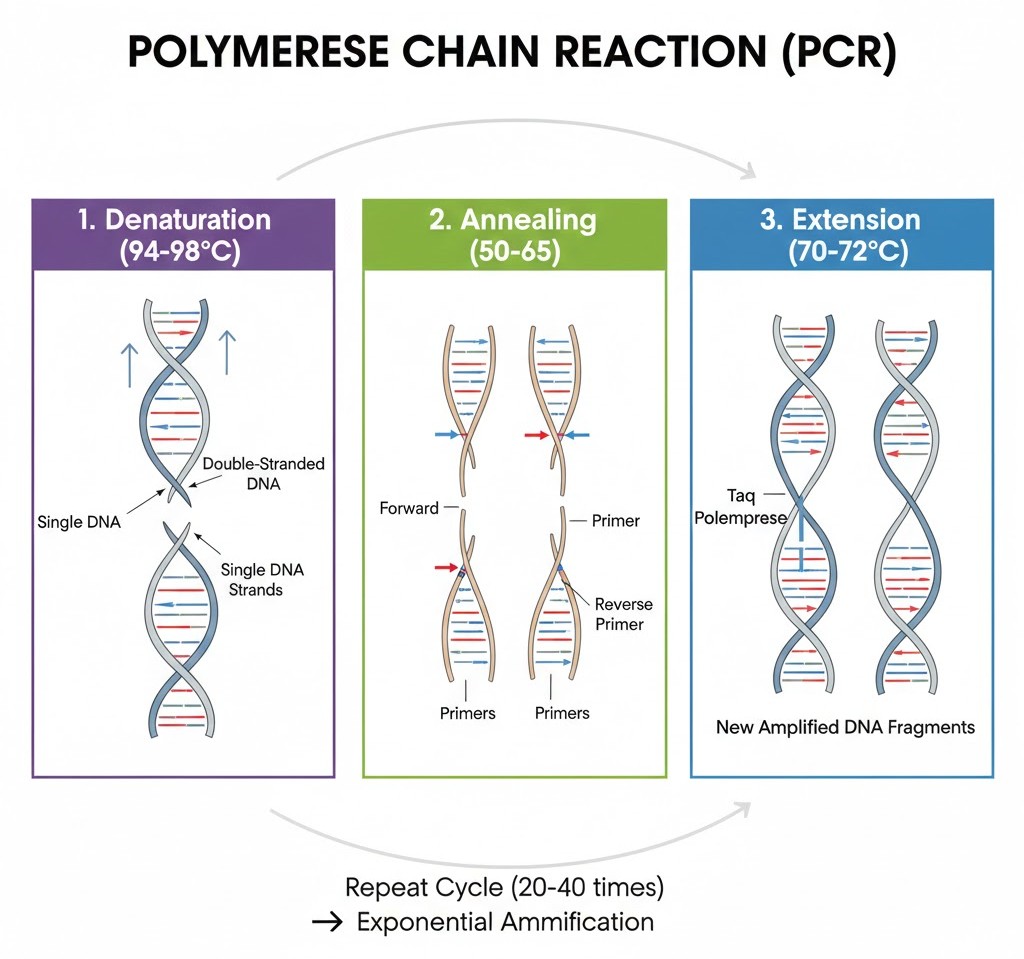
Think of it like a cricket stadium. If you have just one match ticket, you can't bring the whole gang. But with PCR, you can print $1$ billion copies of that ticket in just $30$ cycles!. This magic happens in three easy-peasy steps: Denaturation (heat it up to separate the strands), Annealing (letting those small, chemically synthesised primers stick to their spots), and Extension.
NEET Checkpoint:
What are primers in PCR?
(a) Enzymes that synthesize DNA
(b) Nucleotides that form new DNA strands
(c) Short single-stranded DNA sequences that initiate replication
(d) Buffers that maintain pH
✅ Answer: (c) Small chemically synthesised oligonucleotides complementary to DNA regions — They are the 'starters' for the reaction!.
The real MVP here is Taq Polymerase. Most enzymes "fry" at high heat, but this one is thermostable because it comes from a tough bacterium called Thermus aquaticus. It keeps working even when the temperature is high enough to unzip DNA.
NEET Checkpoint:
Why is Taq polymerase used instead of human DNA polymerase?
(a) It works faster than human DNA polymerase
(b) It can synthesize RNA as well as DNA
(c) It binds primers more efficiently
(d) It is thermostable
✅ Answer: (d) It's thermostable — It stays active during high-temperature denaturation, unlike our enzymes!.
Figure below:
A detailed diagram showing the three steps of PCR: Denaturation of double-stranded DNA at high heat, Annealing of two sets of primers, and Extension using Taq polymerase and deoxynucleotides to produce amplified DNA fragments.
NEET Checkpoint:
How many copies of DNA are produced after $30$ cycles?
(a) $3.0 \times 10^6$
(b) $1.0 \times 10^9$
(c) $5.0 \times 10^8$
(d) $2.0 \times 10^{12}$
✅ Answer: (b) Approximately $1$ billion copies — That's massive amplification from just one segment!.
Practice Question:
In which step of PCR do primers attach to the DNA template?
(a) Denaturation
(b) Annealing
(c) Extension
(d) Ligation
✅ Answer: (b) Annealing — Remember, annealing is like "sticking" the primers to the template so the enzyme can start its work!.
Key Takeaway: PCR Summary
- Purpose: In vitro synthesis of DNA copies.
- Three Steps: Denaturation $\rightarrow$ Annealing $\rightarrow$ Extension.
- The Enzyme: Taq polymerase from Thermus aquaticus (thermostable).
- Outcome: ~ $10^9$ copies after $30$ cycles.
11. Large-Scale Production and Bioreactors
Listen, yaar, growing microbes in a lab flask is fine for a school project, but if you want to make enough insulin for the whole country, you need to think big! To get high yields of recombinant proteins, we use a continuous culture system. In this setup, we drain used medium from one side and pump in fresh medium from the other. This keeps our microbial "factory workers" in the log/exponential phase, where they are physiologically most active!
NEET Checkpoint:
Which growth phase is maintained in a continuous culture for higher biomass?
(a) Lag phase
(b) Log (Exponential) phase
(c) Stationary phase
(d) Death phase
✅ Answer: (b) Log/Exponential phase — This is when the microbes are dividing at their maximum rate!
To handle massive volumes of $100-1000$ litres, we use bioreactors. Think of them as giant, hi-tech steel "handis" where raw materials are biologically converted into specific products using microbial, plant, or human cells. It’s all about the "mahaul"—the reactor provides the perfect temperature, pH, substrate, salts, vitamins, and oxygen.
NEET Checkpoint:
What is the typical volume capacity of a large-scale bioreactor?
(a) $1-10$ litres
(b) $50-100$ litres
(c) $1000$ litres or more
(d) $100-1000$ litres
✅ Answer: (d) $100-1000$ litres — Big vessels for big results!
The most popular ones are stirred-tank reactors. They usually have a curved base (like a kadhai) to help in mixing, and an agitator system to keep everything uniform. They also have oxygen delivery and foam control systems—because too much foam can ruin the batch, just like too much froth on your lassi!
NEET Checkpoint:
Why are sampling ports present in bioreactors?
(a) To add fresh nutrients continuously
(b) To release excess gases
(c) To collect small samples without contaminating the culture
(d) To maintain temperature
✅ Answer: (c) To withdraw small volumes of culture periodically — We need to check the progress without stopping the whole process!
Figure below:
A detailed diagram showing a simple stirred-tank bioreactor with a motor, foam breaker, and flat-bladed impeller, alongside a sparged stirred-tank bioreactor where sterile air bubbles are used to increase the oxygen transfer area.

Practice Question:
Which of the following is NOT a feature of a stirred-tank bioreactor?
(a) Agitator system
(b) Purification system
(c) pH control system
(d) Sampling ports
✅ Answer: (b) Purification system — Purification happens later during downstream processing; the bioreactor is for the "growth" phase.
Key Takeaway:
Bioreactors ($100-1000$ L) provide optimal growth conditions to convert raw materials into products. Continuous culture maintains cells in the log phase for maximum yield.
12. Downstream Processing: The Final Finishing Touch!
Arre junior! We’ve successfully grown our "recombinant" heroes in a massive bioreactor of $(100-1000 \text{ litres})$. But wait—you can’t just bottle that raw culture broth and sell it! Think of it like making masala chai at a local stall; you’ve boiled everything together, but now you need to strain the tea leaves and maybe add a little extra sugar or preservatives before serving it to the customer.
Downstream processing is the collective term for the series of processes—specifically separation and purification—that happen after the biosynthetic stage is complete. It’s all about getting that pure, high-quality product out of the messy mixture.
NEET Checkpoint:
What are the two main components of downstream processing?
(a) Fermentation and purification
(b) Isolation and purification
(c) Sterilization and inoculation
(d) Amplification and cloning
✅ Answer: (b) Isolation and purification — These ensure the final product is isolated from the culture and purified for use.
Once purified, the product is formulated with suitable preservatives so it doesn't spoil on the shelf. If the product is a drug, it must pass through strict clinical trials and quality control testing to ensure patient safety. Each product has its own unique "recipe" for these steps—it's not a one-size-fits-all deal!
NEET Checkpoint:
Is quality control testing the same for every biotechnological product?
(a) Yes, all products undergo identical testing
(b) No, quality control depends on the type of product
(c) Yes, only one standard test is enough
(d) No, testing is not necessary for biotechnological products
✅ Answer: (b) No, it varies from product to product — Different products have different safety and purity requirements.
NEET Checkpoint:
What is added to a finished product before it is marketed?
(a) Microorganisms
(b) Additives or preservatives
(c) Enzymes
(d) Antibiotics
✅ Answer: (b) Additives or preservatives — This is part of the formulation process to ensure the product remains stable.
Practice Question:
Which of the following is NOT typically a part of downstream processing?
(a) Separation
(b) Purification
(c) Expression of the gene in the host
(d) Addition of preservatives
✅ Answer: (c) — Gene expression happens during the biosynthetic phase (upstream), while downstream is all about the post-growth processing!
Key Takeaway: Downstream Processing
- Separation + Purification: Essential steps to isolate the desired product.
- Formulation: Adding preservatives for shelf-life.
- Quality Control: Strict testing and clinical trials (especially for drugs) to guarantee safety.
13. Biotechnology in Agriculture: Bt Crops
Hey there! Ready to see how biology is basically becoming a superpower for farmers? Let's talk GMOs—Genetically Modified Organisms. These are plants or microbes whose genes we've tweaked to make them "super-crops."
Why do we do it? Because GM crops handle abiotic stresses like cold or drought much better than your regular plants. They also reduce our reliance on chemical pesticides and even boost nutrition—like Golden Rice, which is enriched with Vitamin A.
NEET Checkpoint:
What makes Golden Rice special?
(a) Vitamin C
(b) Vitamin A
(c) Iron
(d) Zinc
✅ Answer: (b) Vitamin A — Remember this, yaar, it’s a classic "nutritional value" example!
The real star here is Bt Cotton. It uses a toxin from the bacterium Bacillus thuringiensis. This "Bt toxin" is like a "smart bomb." It exists as an inactive protoxin in the bacterium (so it doesn't kill the host). But once an insect eats it, the alkaline $pH$ of the insect's gut solubilises the crystals and activates the toxin!
NEET Checkpoint:
Why doesn't the Bt toxin kill the Bacillus bacterium?
(a) Bt does not produce the toxin naturally
(b) The toxin is only activated in insects
(c) Bt has immunity to its own toxin
(d) The toxin is ineffective against all bacteria
✅ Answer: (c) It exists as an inactive protoxin.
Think of it like a security guard at a fancy South Delhi club—the guard only reacts if someone creates a specific type of trouble (like that alkaline $pH$ in the gut)! The activated toxin creates pores in the midgut cells, causing them to swell and burst.
NEET Checkpoint:
Which condition activates the Bt protoxin in an insect's gut?
(a) Acidic $pH$
(b) Neutral $pH$
(c) Alkaline $pH$
(d) High Temperature
✅ Answer: (c) Alkaline $pH$ — This is the secret "funda" that turns the toxin on!
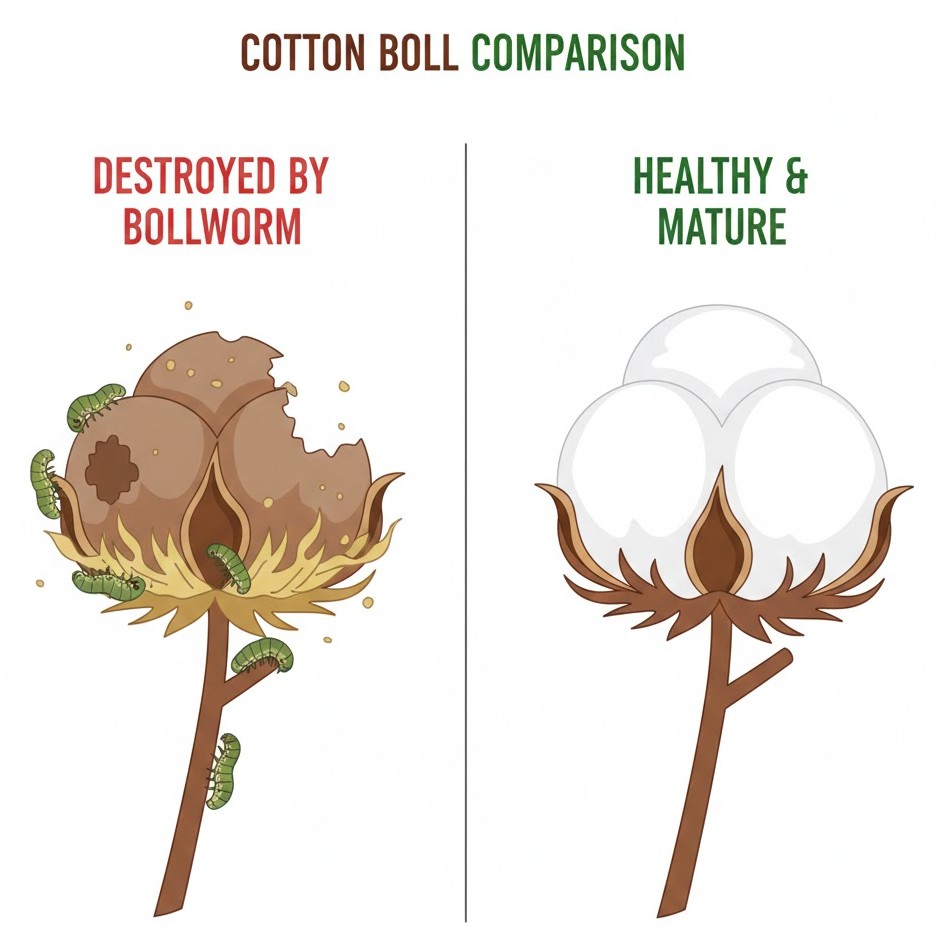
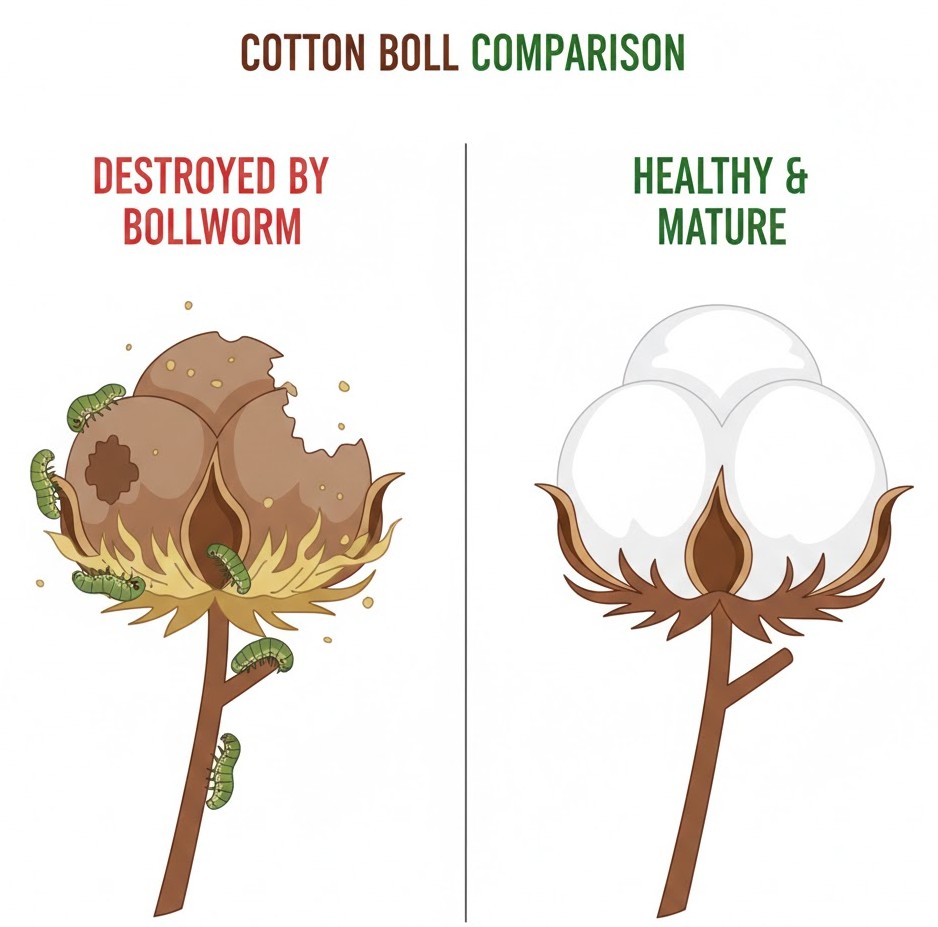
Different Cry genes control different pests. For example, cryIAc and cryIIAb handle cotton bollworms, while cryIAb is the specialist for the corn borer.
Figure below:
A clear diagram showing a comparison between a cotton boll destroyed by bollworms and a healthy, fully mature cotton boll.
Practice Questions:
1. Which gene is specifically used to control the corn borer?
(a) cryIAc
(b) cryIIAb
(c) cryIAb
(d) cryIAd
✅ Answer: (c) cryIAb — Don't get confused between the 'c' and 'b', corn borer is cryIAb!
2. Bt toxin is effective against which group of insects?
(a) Lepidopterans
(b) Coleopterans
(c) Dipterans
(d) All of these
✅ Answer: (d) All of these — Bt is a multi-talented insect killer!
Key Takeaway
- GMOs: Plants with altered genes for stress resistance and nutrition.
- Bt Toxin: Inactive protoxin $\xrightarrow{alkaline pH}$ Active toxin $\rightarrow$ Midgut pores $\rightarrow$ Death.
- Cry Genes: $cryIAc$/$cryIIAb$ (Cotton bollworms) vs $cryIAb$ (Corn borer).
14. Pest Resistance via RNA Interference (RNAi)
Listen up, future doctors! Imagine a tiny nematode (a roundworm) called Meloidogyne incognita trying to hijack the roots of a tobacco plant. It's like a pesky guest who won't leave your favorite pani puri stall! To stop this, we use a high-tech "Mute" button called RNA interference (RNAi).
RNAi is actually a natural cellular defense mechanism found in all eukaryotic organisms. The "funda" is simple: we prevent the translation of specific mRNA so the parasite can't make the proteins it needs to survive. It's like a cricket captain giving the wrong signals to the opposing batsman so they can't score!
NEET Checkpoint:
In which organisms does RNAi naturally occur as a defense mechanism?
(a) Only plants
(b) Only animals
(c) Only fungi
(d) All eukaryotic organisms
✅ Answer: (d) All eukaryotic organisms — Don't get confused, yaar, it’s not just in plants!.
How do we do it? We use Agrobacterium vectors to introduce nematode-specific genes into the plant. These genes are designed to produce both sense and anti-sense RNA. Because these two are complementary, they bond to form double-stranded RNA ($dsRNA$).
NEET Checkpoint:
What is the trigger for silencing a specific mRNA in the RNAi process?
(a) DNA methylation
(b) Ribosomes
(c) Double-stranded RNA (dsRNA)
(d) Single-stranded RNA (ssRNA)
✅ Answer: (c) Complementary $dsRNA$ — This molecule binds to the mRNA and stops it from being translated.
This $dsRNA$ then "silences" the nematode's mRNA. Without its proteins, the parasite can’t survive in the transgenic host.
Figure below:
A clear diagram showing the comparison between (a) the infected roots of a typical control plant with many knots and (b) the healthy, clean roots of a transgenic plant protected by RNAi.
NEET Checkpoint:
Which vector is used to introduce nematode-specific genes into tobacco plants?
(a) pBR322 plasmid
(b) Lambda phage
(c) Cauliflower mosaic virus (CaMV)
(d) Agrobacterium tumefaciens
✅ Answer: (d) Agrobacterium — It’s the standard "delivery boy" for plant biotechnology.
Practice Questions:
- The source of complementary RNA for RNAi can be:
(a) Infection by viruses with RNA genomes
(b) Transposons (mobile genetic elements)
(c) Both (a) and (b)
(d) Only DNA bacteria
✅ Answer: (c) Both (a) and (b) — The NCERT specifically mentions both as potential sources of that critical $dsRNA$.
2. RNAi results in the "silencing" of:
(a) $rRNA$
(b) $tRNA$
(c) $mRNA$
(d) $DNA$
✅ Answer: (c) $mRNA$ — Silencing the $mRNA$ prevents translation, which is the whole point of the exercise!.
Key Takeaway
- Target: Meloidogyne incognita (Tobacco roots).
- Mechanism: Sense + Anti-sense RNA $\rightarrow$ $dsRNA$ $\rightarrow$ Silencing of $mRNA$ $\rightarrow$ No Translation.
- Vector: Agrobacterium.
15. Biotechnology in Medicine and Ethics
Arre junior, listen up! Biotechnology isn’t just about changing crop colours; it’s the ultimate "jugaad" for human health. Let’s clear the funda on how we’ve mastered the art of "healing" using genes.
Genetically Engineered Insulin
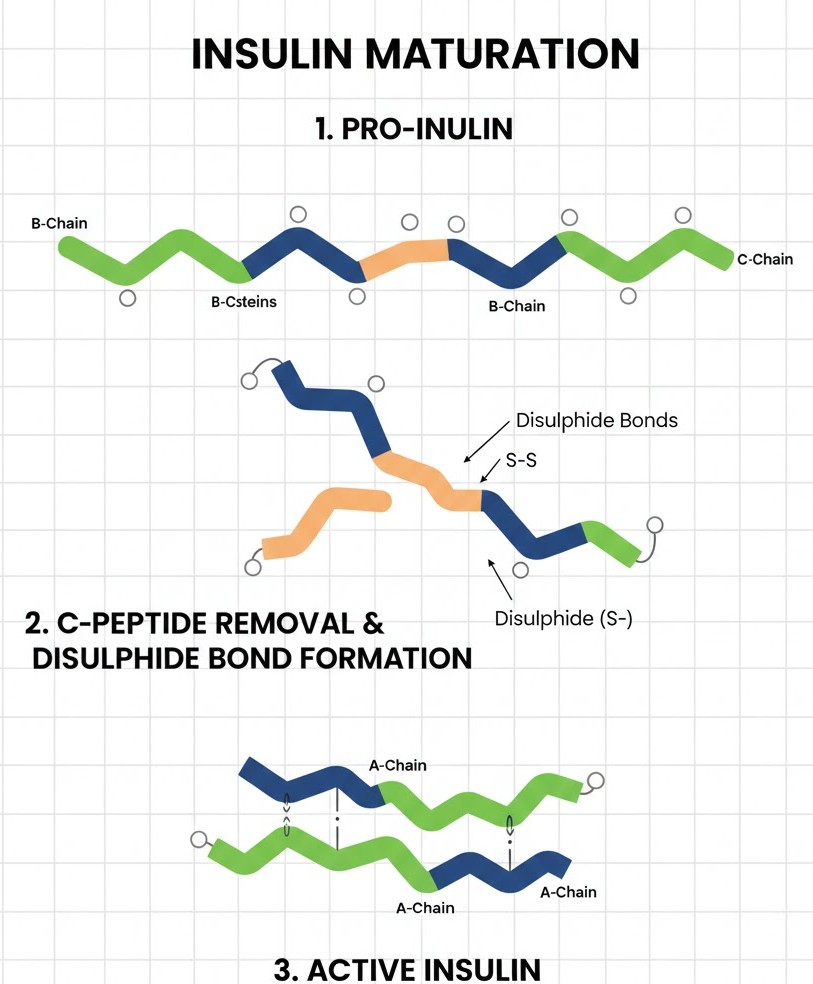
Back in the day, diabetic patients used insulin from slaughtered cattle and pigs, which often caused allergies. In 1983, the American company Eli Lilly changed the game. They synthesised DNA sequences for human insulin chains A and B and introduced them into $E. coli$ plasmids. These chains were produced separately and then linked by disulphide bonds to create mature human insulin. Think of it like making the dough and the potato filling for a samosa separately and then assembling them to get the perfect snack! Remember, natural pro-insulin has an extra C-peptide that gets removed during maturation.
NEET Checkpoint:
Which peptide is removed during the maturation of pro-insulin into insulin?
(a) A-peptide
(b) B-peptide
(c) C-peptide
(d) Disulphide bridge
✅ Answer: (c) C-peptide — It’s like a temporary bus ticket; once you reach the "mature insulin" destination, you don't need it anymore!
Gene Therapy & Transgenic Stars
In 1990, a 4-year-old girl with ADA (Adenosine Deaminase) deficiency received the first clinical gene therapy. Scientists used a retroviral vector to deliver functional ADA cDNA into her lymphocytes. While this requires periodic infusions, introducing the gene at the embryonic stage could be a permanent cure.
NEET Checkpoint:
The first clinical gene therapy was given for which enzyme deficiency?
(a) Insulin
(b) ADA
(c) $\alpha$-1-antitrypsin
(d) Protease
✅ Answer: (b) ADA — Without this enzyme, the immune system goes on a permanent strike!
We also have transgenic animals like Rosie, the 1997 cow. Her milk contained $2.4\text{ g/L}$ of human alpha-lactalbumin, making it better for human babies than regular cow milk. We also produce $\alpha$-1-antitrypsin in animals to treat emphysema.
Figure below:
A clear diagram showing the maturation of pro-insulin, highlighting the removal of the C-peptide and the formation of disulphide bonds between chains A and B.
Ethics and Biopiracy
We can't just play God without rules, yaar! The GEAC (Genetic Engineering Approval Committee) decides if GM research is safe for the public. We also have to fight biopiracy—where companies steal bio-resources without authorization. Remember the Basmati rice saga? In 1997, a US company tried to patent a "new" variety that was actually derived from Indian farmer’s varieties.
NEET Checkpoint:
Which Indian organisation makes decisions regarding the validity of GM research?
(a) UNESCO
(b) GEAC
(c) Eli Lilly
(d) Indian Parliament
✅ Answer: (b) GEAC — They are the principal of the biotech school, keeping everyone in check!
Practice Question:
In 1997, the first transgenic cow, Rosie, produced milk enriched with:
(a) $\alpha$-1-antitrypsin
(b) Human alpha-lactalbumin
(c) Adenosine Deaminase
(d) Insulin chains A and B
✅ Answer: (b) Human alpha-lactalbumin. Rosie’s milk contained $2.4\text{ g/L}$ of this protein, making it nutritionally superior for human babies.
Key Takeaway
- Eli Lilly (1983): Produced A and B chains in $E. coli$.
- ADA Deficiency (1990): First gene therapy using retroviral vectors.
- Rosie (1997): Human protein-enriched milk ($2.4\text{ g/L}$).
- GEAC: Regulates GM safety and ethics.