
1. Introduction to Health and Human Welfare
Health isn't just about avoiding a fever so you can skip your coaching classes. According to our NCERT, health is defined as a state of complete physical, mental, and social well-being. Back in the day, the Greeks and our own Ayurveda system thought health was a balance of "humors". They even believed people with "blackbile" were "hot personalities" prone to fevers! But then William Harvey, the absolute legend who discovered blood circulation, used a thermometer to prove them wrong—showing that everyone's temperature was actually normal. Let's clear up this funda: mind and mental state really do affect our immune system through the neural and endocrine systems.
NEET Checkpoint:
Who disproved the 'good humor' hypothesis using experimental methods?
(a) Aristotle
(b) Francesco Redi
(c) William Harvey
(d) Louis Pasteur
✅ Answer: (c) William Harvey — He used the thermometer to demonstrate that individuals with 'blackbile' had normal body temperatures.
Think of your body like a high-stakes cricket match; if the pitch (your health) is ruined by genetic disorders, infections, or a bad lifestyle (junk food and no sleep), you're going to lose the game. To keep the "stumps" standing, we need a balanced diet, personal hygiene, and regular Yoga or exercise.
NEET Checkpoint:
What are the three main factors that affect our health?
(a) Age, gender, and height
(b) Genetic factors, environmental factors, and lifestyle
(c) Climate, occupation, and income
(d) Diet, exercise, and sleep
✅ Answer: (b) (i) Genetic factors, (ii) environmental factors, and (iii) lifestyle. Genetic factors – traits and diseases we inherit from our parents, Environmental factors – surroundings like air, water, sanitation, and climate, Lifestyle – our habits such as diet, exercise, sleep, and hygiene
Our world is full of "uninvited guests" called pathogens—bacteria, viruses, fungi, protozoans, and parasites that cause morphological and functional damage. Whether it's the high fever of typhoid ($39^{\circ}C$ to $40^{\circ}C$) or the impact of HIV/AIDS and cancer, biology gives us the tools to fight back. We use vaccines to generate "memory" in our immune system, helping us stay one step ahead of diseases like polio.
NEET Checkpoint:
Does "health" simply mean physical fitness or the absence of disease?
(a) Yes, health means only physical fitness
(b) Yes, health means absence of disease
(c) No, health includes physical, mental, and social well-being
(d) Health depends only on age
✅ Answer: (c) No — It is a state of complete physical, mental, and social well-being.
But wait, microbes aren't just villains! They are our kitchen heroes making curd (Lactobacillus) and the secret behind biogas and sewage treatment. From using Bacillus thuringiensis in agriculture to treating waste, microbes are essential for human welfare. Even those who fall into drug or alcohol abuse can be helped through proper counselling and medical support to lead a normal life.
Practice Questions:
1. Which of the following is NOT a component of the definition of health according to NCERT?
(a) Physical well-being
(b) Mental well-being
(c) Social well-being
(d) Financial well-being
✅ Answer: (d) Financial well-being — Health is specifically defined as physical, mental, and social well-being.
2. Pathogens that enter the gut must be able to survive which condition?
(a) High pH
(b) Low pH in the stomach
(c) Absence of enzymes
(d) High temperature
✅ Answer: (b) Low pH in the stomach — Pathogens must adapt to survive the acidic environment and digestive enzymes of the host.
Key Takeaway
- Health: Complete physical, mental, and social well-being.
- Influencers: Genetics, infections, and lifestyle (food, water, rest, exercise).
- Pathogens: Disease-causing organisms like bacteria, viruses, fungi, and parasites.
- Microbes: Vital for human welfare in household products, industry, and waste management.
2. Bacterial and Viral Pathogens
Hey there! Ready to decode some biological villains? Pathogens are like those uninvited guests who crash your system and cause absolute chaos by interfering with your vital activities. Let’s clear up the funda of how the bacterial and viral squads operate.
First up is Typhoid fever, caused by the bacterium Salmonella typhi. Think of it as a stealthy intruder that enters via contaminated food or water—perhaps from a roadside pani puri stall with poor hygiene—and settles in your small intestine before migrating to other organs via blood. It brings a sustained high fever of $39^{\circ} \text{ to } 40^{\circ}C$, stomach pain, and loss of appetite.
NEET Checkpoint:
Which classic diagnostic test confirms typhoid?
(a) Widal test
(b) ELISA test
(c) Mantoux test
(d) Tuberculin test
✅ Answer: (a) The Widal test—and don't forget the famous "Typhoid Mary" who spread it for years as a carrier!
Now, don't mix up Pneumonia with the Common Cold. Pneumonia, caused by Streptococcus pneumoniae or Haemophilus influenzae, is serious because it infects the alveoli of the lungs, filling them with fluid and making breathing a nightmare. In severe cases, your fingernails might even turn bluish! Conversely, Rhino viruses (the common cold gang) only bother your nose and upper respiratory passage, never the lungs.
NEET Checkpoint:
How long does a common cold typically last?
(a) 1–2 days
(b) 3–7 days
(c) 2–3 weeks
(d) More than a month
✅ Answer: (b) 3-7 days—It’s infectious but usually self-limiting.
Transmission is the trick: typhoid is primarily water-borne, while pneumonia and colds are air-borne (inhaling droplets/aerosols) or spread by sharing everyday items like pens and books.
NEET Checkpoint:
Is pneumonia water-borne?
(a) Yes, it spreads through contaminated water
(b) Yes, it spreads through food and water
(c) No, it is usually airborne
(d) It spreads through insect bites
✅ Answer: (c) No—It is acquired by inhaling droplets or sharing utensils with an infected person.
Practice Questions:
1. A patient presents with fluid-filled alveoli and bluish lips. The most likely pathogen is:
(a) Salmonella typhi
(b) Rhino virus
(c) Streptococcus pneumoniae
(d) Plasmodium
✅ Answer: (c) — These are classic symptoms of severe pneumonia affecting lung air sacs.
2. Which of the following is NOT a symptom of Typhoid?
(a) Constipation
(b) Nasal congestion
(c) Loss of appetite
(d) Sustained high fever
✅ Answer: (b) — Nasal congestion is a hallmark of the common cold, not typhoid.
Key Takeaway
- Typhoid: S. typhi; small intestine; Widal test; $39-40^{\circ}C$ fever; water-borne.
- Pneumonia: S. pneumoniae; affects alveoli (fluid-filled); air-borne.
- Common Cold: Rhino viruses; nose/throat only; air-borne or contaminated objects.
3. Protozoan and Helminthic Diseases
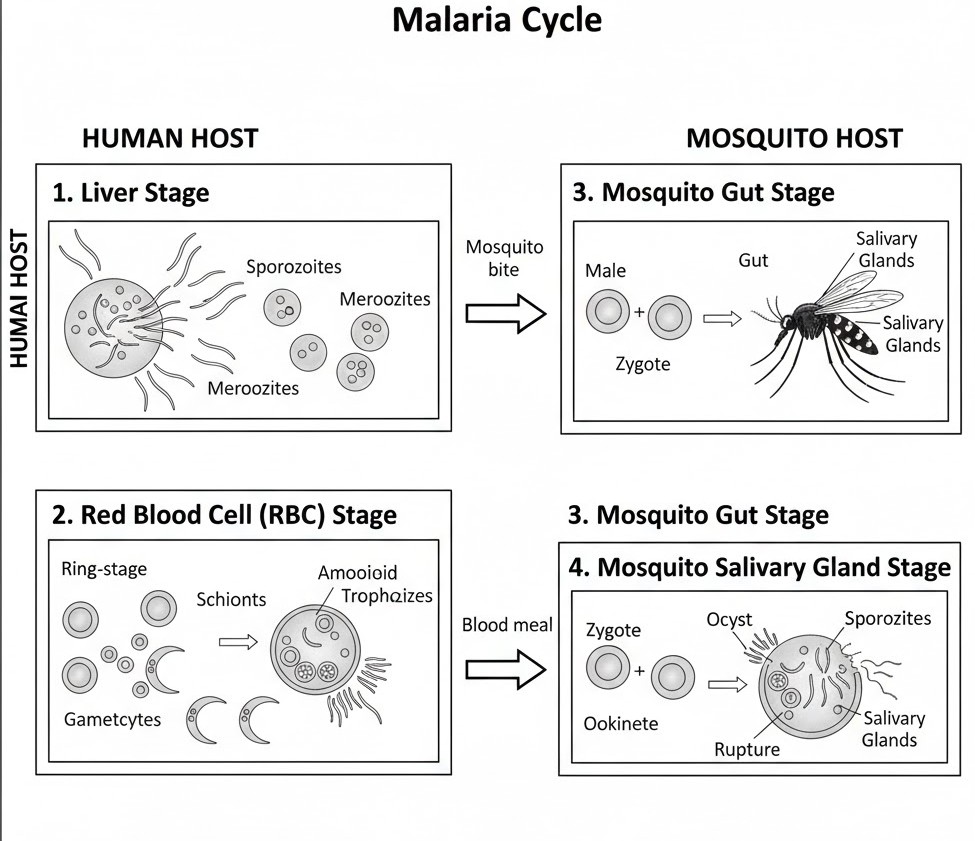
Listen up, juniors! Dealing with parasites is like dealing with that one uninvited guest who won't leave your house party. First, let's talk about Malaria, caused by the protozoan $Plasmodium$. This parasite is quite the traveller, requiring two hosts—humans and the female $Anopheles$ mosquito—to complete its life cycle. When the mosquito bites, it injects sporozoites (the infectious stage). These parasites first hitch a ride to your liver, multiply, and then attack your Red Blood Cells (RBCs). When these RBCs burst, they release a toxic substance called haemozoin, which is the real villain behind those recurring chills and high fevers every $3$ to $4$ days.
NEET Checkpoint:
Which species of $Plasmodium$ causes the most serious, potentially fatal 'malignant' malaria?
(a) Plasmodium vivax
(b) Plasmodium malariae
(c) Plasmodium ovale
(d) Plasmodium falciparum
✅ Answer: (d) $P. falciparum$ — It’s the most dangerous one out of $P. vivax$ and $P. malaria$.
Next, have you ever had a "stomach upset" after eating pani puri from a stall with too many flies? That could be Amoebiasis (amoebic dysentery) caused by $Entamoeba\ histolytica$. These live in the large intestine and cause constipation, abdominal pain, and stools with excess mucous or blood clots. Houseflies act as mechanical carriers, moving the parasite from faecal matter to your food.
NEET Checkpoint:
What is the primary source of infection for Amoebiasis?
(a) Mosquito bites
(b) Airborne droplets
(c) Contaminated food and water
(d) Direct skin contact
✅ Answer: (c) Contaminated water and food — Houseflies contaminate them with faecal matter.
Moving to the worms, $Ascaris$ (the common roundworm) causes Ascariasis. Imagine a "traffic jam" in your gut; symptoms include internal bleeding, muscular pain, fever, and even blockage of the intestinal passage. Lastly, there is Filariasis (Elephantiasis) caused by $Wuchereria$ ($W. bancrofti$ and $W. malayi$). These worms cause chronic inflammation of the lymphatic vessels, usually in the lower limbs, making them look like an elephant's leg. Like malaria, this is also spread by a female mosquito vector.
NEET Checkpoint:
Which organs are often affected by Filariasis besides the lower limbs?
(a) Liver and spleen
(b) Lungs and heart
(c) Genital organs
(d) Brain and spinal cord
✅ Answer: (c) Genital organs — This often results in gross deformities.
Figure below:
A clear, multi-stage diagram showing the life cycle of Plasmodium, identifying the human host stages in the liver and RBCs, and the mosquito host stages in the gut and salivary glands.
Practice Questions:
1. The rupture of RBCs during malaria is associated with the release of:
(a) Sporozoites
(b) Gametocytes
(c) Haemozoin
(d) Interferons
✅ Answer: (c) Haemozoin — This toxin causes the periodic fever and chills.
2. Which of the following is a helminthic disease transmitted by a mosquito vector?
(a) Ascariasis
(b) Amoebiasis
(c) Filariasis
(d) Ringworm
✅ Answer: (c) Filariasis — It is caused by $Wuchereria$ and transmitted by mosquitoes.
Key Takeaway
- Malaria: $Plasmodium$, 2 hosts, female $Anopheles$ vector, haemozoin causes fever.
- Amoebiasis: $Entamoeba\ histolytica$, housefly carrier, large intestine infection.
- Ascariasis: $Ascaris$, intestinal blockage, contaminated food/water.
- Filariasis: $Wuchereria$, chronic inflammation of lymph vessels, mosquito vector.
4. Fungal Infections and Vector-Borne Prevention
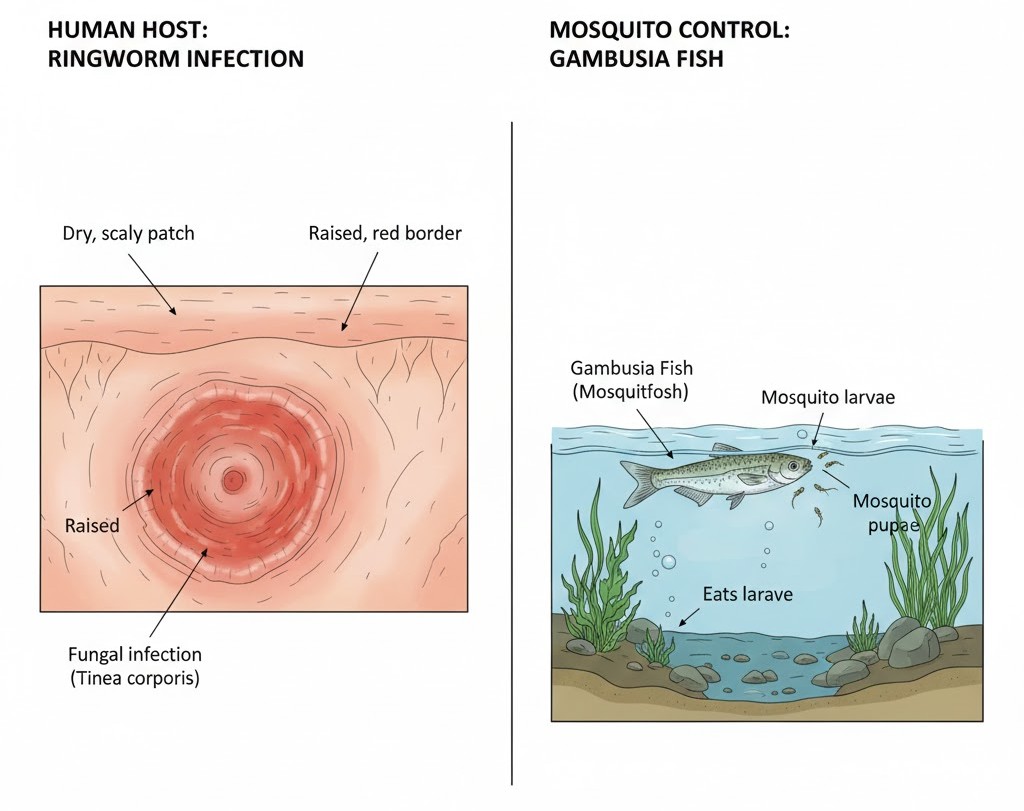
Listen up, junior! Ever felt that annoying itch after a sweaty day at tuition? That's often the work of fungi belonging to the genera Microsporum, Trichophyton, and Epidermophyton, which are responsible for Ringworms. They show up as dry, scaly lesions on various body parts like the skin, nails, or scalp. These lesions come with intense itching, and the fungi absolutely love the heat and moisture in your skin folds—think of it like how a local pani puri stall gets super crowded during the humid monsoon! You can catch this from the soil or even by sharing a friend’s towel, clothes, or comb, so keep your belongings to yourself, yaar!
NEET Checkpoint:
Which of the following genera is NOT typically associated with ringworm?
(a) Microsporum
(b) Trichophyton
(c) Epidermophyton
(d) Salmonella
✅ Answer: (d) Salmonella — Salmonella is a bacterium causing typhoid, while the other three are the "fungal trio" behind ringworms.
Now, let's tackle those buzzing villains! Diseases like Dengue and Chikungunya are spread by Aedes mosquitoes. To stop them, we need to be like a pro cricket captain—setting a tight field! Public hygiene is your best defense: ensure proper disposal of waste and excreta, and periodically disinfect water reservoirs, pools, and tanks. Don’t let water stagnate in household coolers or around your home. For a cool biological "hitman" move, introduce Gambusia fish into ponds; they love snacking on mosquito larvae! You can also use wire mesh on doors and windows to keep your room a "no-fly zone".
Figure below:
A detailed medical illustration showing a patch of skin affected by ringworm with dry, scaly lesions, alongside a diagram of a Gambusia fish eating mosquito larvae in a pond setting.
NEET Checkpoint:
Gambusia is a type of:
(a) Bacteria
(b) Fungus
(c) Fish
(d) Mosquito
✅ Answer: (c) Fish — Specifically, it is a predatory fish used to biologically control mosquito populations by eating their larvae.
NEET Checkpoint:
The vector for Chikungunya is:
(a) Anopheles mosquito
(b) Aedes mosquito
(c) Housefly
(d) Culex mosquito
✅ Answer: (b) Aedes mosquito — Both Dengue and Chikungunya are transmitted to humans by the Aedes vector.
Practice Questions:
1. Ringworms thrive in skin folds such as the groin or between toes because:
(a) These areas are exposed to more sunlight
(b) Heat and moisture help these fungi to grow
(c) These areas have the most blood circulation
(d) These areas are always dry
Explanation: Fungi causing ringworm specifically thrive in warm and moist environments, making skin folds ideal for their growth.
2. Which measure is specifically recommended for controlling diseases like Malaria and Filariasis?
(a) Avoiding close contact with infected persons
(b) Using only disposable needles
(c) Eliminating vectors and their breeding places
(d) Vaccination against the pathogen
Explanation: Since these are vector-borne diseases, the most important measure is to control or eliminate the insects and their breeding sites.
Key Takeaway
- Ringworm Genera: Microsporum, Trichophyton, and Epidermophyton.
- Symptoms: Dry, scaly lesions + Intense itching.
- Vector Prevention: Eliminate stagnant water, use mosquito nets, and introduce Gambusia fish to target larvae.
- Public Hygiene: Essential for controlling food/water-borne agents through waste disposal and water disinfection.
5. Basic Concepts of Immunology: Innate and Acquired
Listen up, junior! Think of your body as a high-security society. Immunity is the overall ability of your system to fight off those pesky disease-causing organisms. It’s like having a personal security team that never sleeps!
Innate Immunity: The "Born with It" Defense
Innate immunity is non-specific and present right from birth. It doesn't care who the intruder is; it just blocks everyone! It uses four types of barriers:
1. Physical: Your skin is the main gatekeeper, while mucus coating in your respiratory and gut tracts traps microbes.
2. Physiological: Think of the acid in your stomach, saliva, and tears as chemical "no-entry" signs.
3. Cellular: Certain WBCs like PMNL-neutrophils, monocytes, and macrophages act like "Pac-Men," eating up microbes through phagocytosis.
4. Cytokine: Virus-infected cells secrete interferons, which act like a "lookout" signal to protect healthy neighbors.
NEET Checkpoint:
Which barrier involves interferons?
(a) Physical
(b) Physiological
(c) Cellular
(d) Cytokine
✅ Answer: (d) Cytokine — These proteins protect non-infected cells from further viral infection.
Acquired Immunity: The Memory Master
Acquired immunity is pathogen-specific and has a memory. The first time you face a pathogen, the primary response is low intensity. But if that same "villain" tries to enter again, your body hits back with a highly intensified secondary (anamnestic) response because it remembers the first encounter. It's like a cricketer recognizing a bowler's trick delivery after being out once!
NEET Checkpoint:
What is the intensified secondary response called?
(a) Primary response
(b) Allergic response
(c) Anamnestic response
(d) Inflammatory response
✅ Answer: (c) Anamnestic response — This happens because the body "remembers" the first encounter.
The Lymphocyte Duo & Antibodies
This defense is run by two types of lymphocytes:
* B-lymphocytes: These guys produce an "army of proteins" called antibodies into the blood to fight pathogens. This is the humoral immune response.
* T-lymphocytes: They don’t make antibodies themselves but help B-cells produce them. They also mediate Cell-Mediated Immunity (CMI).
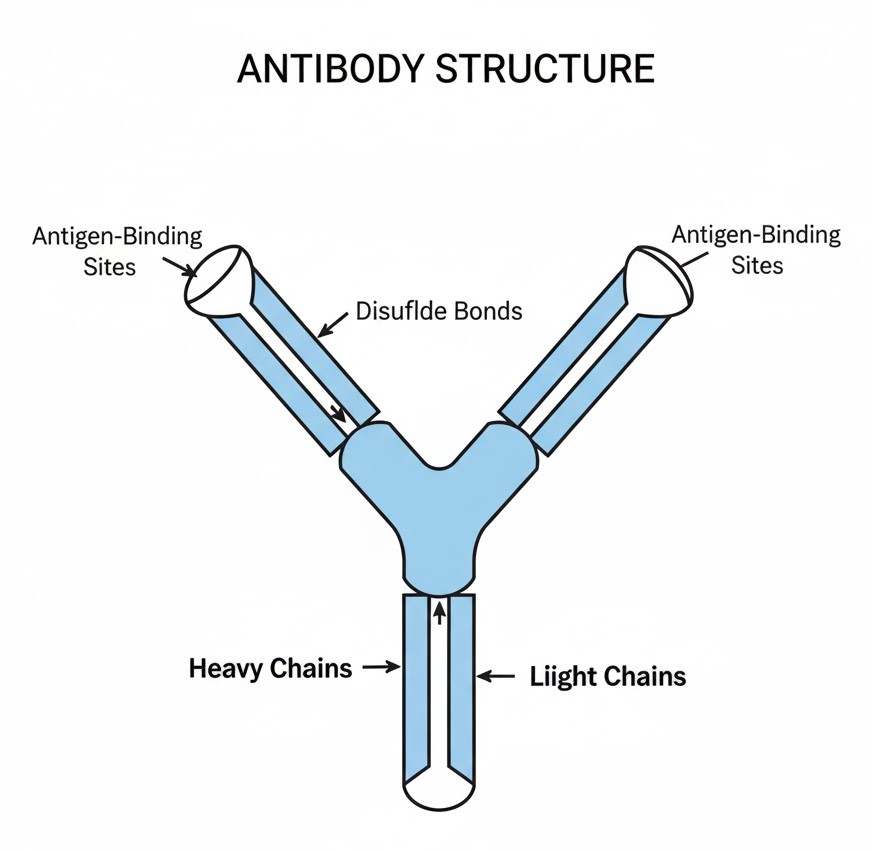
An antibody molecule has four peptide chains (two small light and two longer heavy), represented as $H_2L_2$.
Figure below:
A clear diagram of an antibody molecule showing the 'Y' shape, four peptide chains labeled as light and heavy chains, disulfide bonds connecting them, and the antigen-binding sites at the tips.
Organ Grafts and Rejection
Why can’t we just take a kidney from a random person? Because our body can differentiate 'self' and 'non-self'. CMI is responsible for graft rejection, which is why tissue matching is a must before surgery.
NEET Checkpoint:
Which immune response is responsible for organ graft rejection?
(a) Humoral
(b) Innate
(c) Cell-mediated
(d) Physiological
✅ Answer: (c) Cell-mediated — T-lymphocytes recognize the graft as 'non-self' and trigger rejection.
Practice Question:
An antibody molecule is represented as:
(a) $H_2L_4$
(b) $H_4L_2$
(c) $H_2L_2$
(d) $H_3L_3$
✅ Answer: (c) $H_2L_2$ — It consists of two heavy and two light peptide chains.
Key Takeaway
- Innate: Non-specific, 4 barriers (Physical, Physiological, Cellular, Cytokine).
- Acquired: Pathogen-specific, memory-based, involves B and T-cells.
- Antibody: $H_2L_2$ structure.
- Graft Rejection: Handled by Cell-Mediated Immunity (CMI).
6. Vaccination, Allergies, and Autoimmunity
Listen up, junior! Ready to see how your body plays defense better than a star wicketkeeper? Let’s clear up the funda of immunity!
Vaccination is based on the memory of our immune system. Think of it as a mock test; we introduce a weakened pathogen (vaccine) so your B and T-lymphocytes learn the "pattern". When the real enemy attacks later, your body smashes it with a massive production of antibodies.
NEET Checkpoint:
Which principle forms the basis of vaccination?
(a) Specificity
(b) Diversity
(c) Memory
(d) Phagocytosis
✅ Answer: (c) Memory — The immune system "remembers" the first encounter to act faster next time!
Active vs. Passive Immunity:
Active immunity is like learning to drive—it’s slow because your body makes its own antibodies after an infection or vaccine. Passive immunity is like taking a rickshaw—you get ready-made antibodies for a quick fix.
* Colostrum: The yellowish milk secreted by mothers contains abundant $IgA$ antibodies to protect the infant (Passive!).
* Snakebites: We inject preformed antibodies because we need an immediate response.
NEET Checkpoint:
Antibodies received by a foetus through the placenta are:
(a) Active immunity
(b) Passive immunity
(c) Artificial immunity
(d) Innate immunity
✅ Answer: (b) Passive Immunity — The baby gets "ready-made" protection from the mother!
Allergies & Autoimmunity:
Ever sneezed like a train engine at a dusty pani puri stall? That’s an allergy! It's an exaggerated response to allergens (like pollen or mites) involving $IgE$ antibodies and chemicals like histamine from mast cells.
Autoimmunity is when the body goes haywire and attacks "self" cells. Rheumatoid arthritis is a classic example of this self-damage.
Lymphoid Organs:
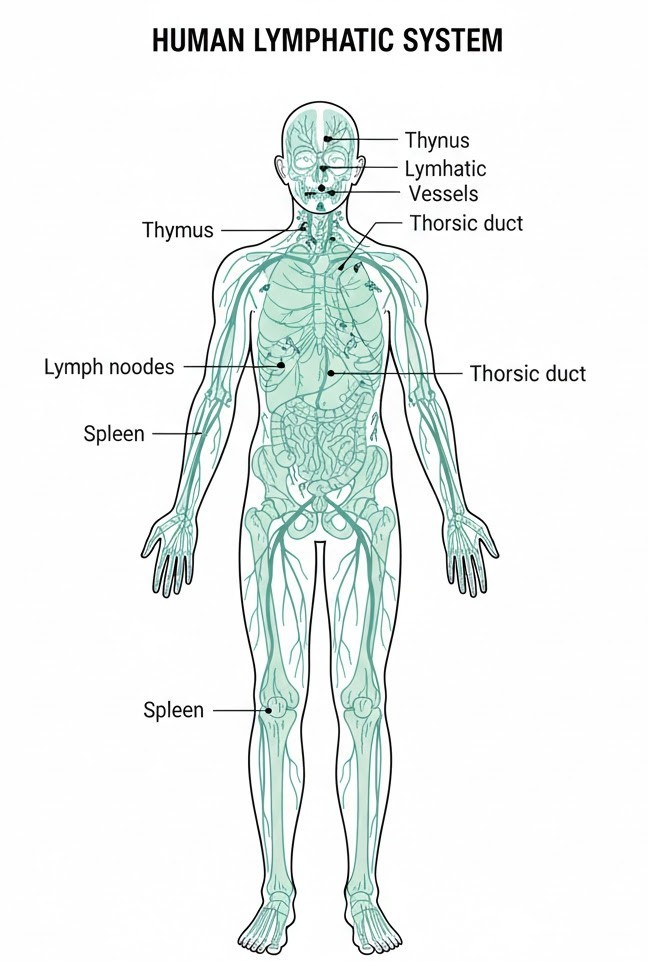
Primary organs (bone marrow, thymus) are the training academies where lymphocytes mature. Secondary organs like the spleen and lymph nodes are the actual battlefields where they fight antigens. Notice this: MALT (Mucosa-associated lymphoid tissue) makes up about $50\%$ of all lymphoid tissue in your body!.
Figure below:
A clear diagram showing the human lymphatic system, specifically identifying the thymus, lymph nodes, and lymphatic vessels.
NEET Checkpoint:
What percentage of lymphoid tissue does MALT constitute?
(a) 20%
(b) 30%
(c) 50%
(d) 70%
✅ Answer: (c) $50\%$ — That's a huge chunk of your internal security system!
Practice Question:
Which of the following is a primary lymphoid organ?
(a) Spleen
(b) Tonsils
(c) Thymus
(d) Peyer’s patches
✅ Answer: (c) Thymus — It's where T-lymphocytes develop and mature!
Key Takeaway
- Vaccination: Memory-based protection.
- Colostrum: Contains $IgA$ (Passive immunity).
- Allergy: $IgE$ + Histamine/Serotonin.
- Autoimmunity: Body attacks self (e.g., Rheumatoid arthritis).
- MALT: $50\%$ of lymphoid tissue.
7. HIV and AIDS
Arre, let’s clear up the funda of AIDS! It stands for Acquired Immuno Deficiency Syndrome, which means it’s not something you are born with—it’s acquired during your lifetime. The culprit is HIV (Human Immunodeficiency Virus), a sneaky retrovirus that carries an RNA genome inside an envelope. Think of it like a high-tech spy carrying a secret code!
NEET Checkpoint:
What group of viruses does HIV belong to?
(a) Adenoviruses
(b) Herpesviruses
(c) Retroviruses
(d) Rhabdoviruses
✅ Answer: (c) Retrovirus — These viruses use an envelope to protect their RNA genome.
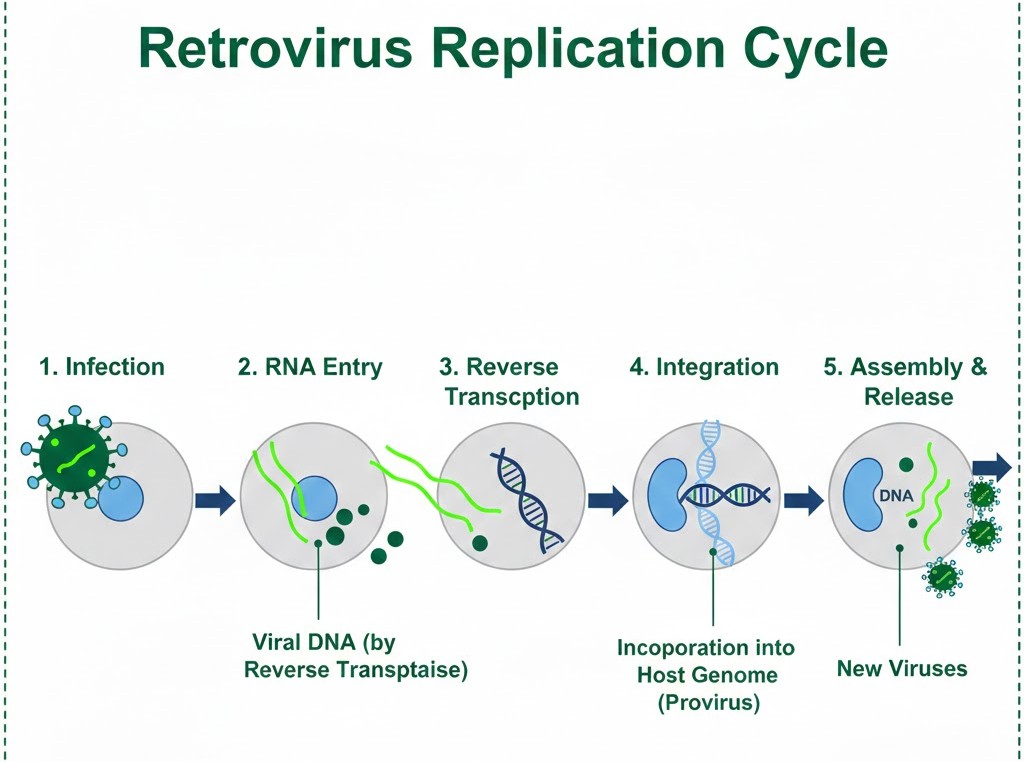
Once HIV enters the body, it’s like a fake courier guy entering a colony. It first heads to the macrophages, which start acting like an "HIV factory". Inside, the virus uses an enzyme called reverse transcriptase to turn its RNA into viral DNA, which then sneaks into our own host cell's DNA. It also attacks Helper T-lymphocytes ($T_H$), replicating and bursting out to infect more cells. This drastically reduces the $T_H$ count, making the person so immuno-deficient that even a simple infection becomes a major problem.
NEET Checkpoint:
Which cell acts as the "HIV factory" in the human body?
(a) T-helper cells (CD4⁺)
(b) B cells
(c) Macrophages
(d) Red blood cells
✅ Answer: (c) Macrophages — This is where the virus replicates and produces new virus particles while the cell survives.
Figure below:
A diagram showing the replication of a retrovirus: 1. Virus infecting an animal cell, 2. Viral RNA introduced into the cytoplasm, 3. Viral DNA produced by reverse transcriptase, 4. Viral DNA incorporating into the host genome, 5. New viral RNA and viruses being produced.
Transmission happens through sexual contact, contaminated blood, sharing needles (very common in IV drug abusers), or from an infected mother to her child. Remember, it only spreads through body fluids, not by a simple handshake or hug! For diagnosis, we rely on the ELISA (Enzyme-Linked Immuno-Sorbent Assay) test.
NEET Checkpoint:
Is AIDS a congenital disease?
(a) Yes, it is present at birth
(b) No, it is acquired
(c) Yes, it is inherited genetically
(d) It depends on the mother’s blood type
✅ Answer: (b) No — It is acquired during the lifetime of an individual and is not present from birth.
Since there's no cure (drugs only prolong life), prevention is our best bet. Organisations like NACO (National AIDS Control Organisation) and WHO are doing a great job educating people with the motto "don't die of ignorance". They promote safe sex, use of disposable needles, and regular check-ups.
Practice Questions:
1. Which enzyme is responsible for converting viral RNA to DNA in HIV?
(a) DNA Polymerase
(b) Reverse transcriptase
(c) Ligase
(d) Helicase
✅ Answer: (b) Reverse transcriptase — It’s the key enzyme that allows retroviruses to integrate into host DNA.
2. High-risk groups for HIV include:
(a) Individuals with multiple sexual partners
(b) Drug addicts using intravenous needles
(c) Children born to HIV+ mothers
(d) All of the above
✅ Answer: (d) All of the above — These categories involve direct contact with infected body fluids or blood.
Key Takeaway
- Pathogen: HIV (Retrovirus with RNA genome).
- Factories: Macrophages; Target: Helper T-cells ($T_H$).
- Detection: ELISA.
- Prevention: Safe practices promoted by NACO and WHO.
8. Cancer: Mechanisms and Treatment
Listen up, yaar! Cancer is basically when our body's cells forget how to behave and lose their "manners". In a healthy body, cell growth is strictly regulated by contact inhibition—a cool property where normal cells stop growing once they touch each other. Think of it like a polite student who won't try to sit on a tuition bench that's already full! But cancer cells? They lose this property and just keep piling up to form tumors.
Tumors come in two types: benign and malignant. Benign tumors are like a parked rickshaw; they stay in one spot and don't cause much trouble. Malignant tumors, however, are a mass of proliferating "neoplastic" cells that invade nearby tissues and steal nutrients from normal cells. Their scariest move is metastasis, where cells slough off, travel through the blood, and start new "branches" of cancer elsewhere in the body.
NEET Checkpoint:
Which property allows normal cells to stop growing when they touch others?
(a) Apoptosis
(b) Differentiation
(c) Contact inhibition
(d) Mitosis
✅ Answer: (c) Contact inhibition — Cancer cells lose this property, leading to uncontrolled growth.
What turns a normal cell into a "villain"? Carcinogens!
1. Physical: $X-rays$, gamma rays, and $UV$ radiation.
2. Chemical: Tobacco smoke (the big culprit for lung cancer).
3. Biological: Oncogenic viruses and proto-oncogenes ($c-onc$) which are already in our cells but can get "activated".
NEET Checkpoint:
Identify the chemical carcinogen majorly responsible for lung cancer.
(a) Asbestos
(b) Alcohol
(c) Benzene
(d) Tobacco smoke
✅ Answer: (d) Tobacco smoke — It contains potent chemical carcinogens.
To catch cancer early, we use biopsies (checking tissue under a microscope) and imaging like CT scans (which use $X-rays$ for 3D images) or MRI. MRI is the VIP here because it uses strong magnetic fields and non-ionising radiations to spot tiny changes in tissue.
NEET Checkpoint:
How does CT differ from MRI?
(a) CT uses X-rays, MRI uses magnetic fields and radio waves
(b) CT is slower, MRI is faster
(c) CT shows soft tissues better than MRI
(d) CT is non-invasive, MRI is invasive
✅ Answer: (a) CT uses $X-rays$ for 3D imaging, while MRI uses strong magnetic fields and non-ionising radiation.
Treatment usually involves a combo of surgery, radiotherapy (lethally zapping the tumor), and chemotherapy (though drugs can cause hair loss and anemia). We also use immunotherapy, like giving patients $\alpha$-interferon to help their own immune system destroy the tumor.
Practice Questions:
1. The property of malignant tumors where they spread to distant sites is:
(a) Contact inhibition
(b) Metastasis
(c) Neoplastic transformation
(d) Benign growth
✅ Answer: (b) — Metastasis is the most feared property of malignant tumors where cells travel via blood.
2. Which of the following is a biological response modifier used in cancer treatment?
(a) Histamine
(b) $c-onc$
(c) $\alpha$-interferon
(d) Morphine
✅ Answer: (c) — $\alpha$-interferon activates the immune system to help destroy the tumor.
Key Takeaway
- Cancer: Breakdown of contact inhibition.
- Metastasis: Fearful spread of malignant cells via blood.
- Detection: Biopsy, CT ($X-ray$), and MRI (Magnetic fields).
- Treatment: Surgery, Radiation, Chemo, and Immunotherapy ($\alpha$-interferon).
9. Adolescence and Drug Abuse
Listen up, junior! Adolescence isn't just about growing a beard or worrying about your crush; it is a critical "bridge" linking childhood and adulthood, specifically the period between $12-18$ years of age. Think of it as a biological construction zone—it's a very vulnerable phase for your mental and psychological development.
So, why do people fall into the trap? Often, it starts with simple curiosity, a need for adventure, or just trying to look "cool" like a movie star while hanging out at a local tapri. Other times, it's the stress of wanting to top those grueling coaching centre mock tests or peer pressure from friends who think experimentation is progressive. Arre, even an unstable family structure can push a teen toward these habits.
NEET Checkpoint:
Adolescence is defined as the period between:
(a) $10-15$ years
(b) $12-18$ years
(c) $14-20$ years
(d) $18-25$ years
✅ Answer: (b) $12-18$ years — This is the key "bridge" period in the NCERT.
Let’s clear up the funda on the big three drug categories:
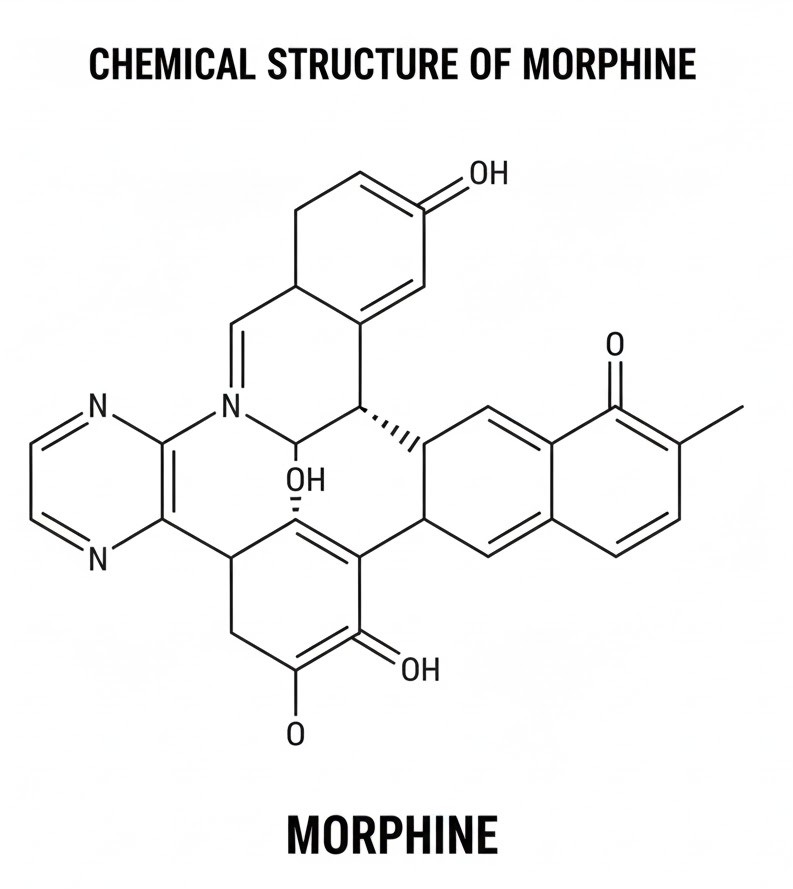
1. Opioids: These bind to specific receptors in your Central Nervous System (CNS) and gastrointestinal tract. Take Heroin (smack), for example—it’s chemically diacetylmorphine, and it’s a depressant that slows down body functions.
2. Cannabinoids: Derived from Cannabis sativa, these interact with brain receptors and are famous for their effects on the cardiovascular system.
3. Coca Alkaloids: Cocaine (coke/crack) comes from Erythroxylum coca. it has a potent stimulating action on the CNS and interferes with dopamine transport.
NEET Checkpoint:
Which system is primarily affected by cannabinoids?
(a) Nervous system
(b) Digestive system
(c) Respiratory system
(d) Cardiovascular system
✅ Answer: (d) Cardiovascular system — Don't get confused with the respiratory system, yaar!
NEET Checkpoint:
Heroin is chemically known as?
(a) Morphine
(b) Codeine
(c) Diacetylmorphine
(d) Methadone
✅ Answer: (c) Diacetylmorphine — It is obtained by the acetylation of morphine.
Figure below:
A clear diagram showing the chemical structure of Morphine.
Practice Questions:
1. Morphine is extracted from the latex of which plant?
(a) Cannabis sativa
(b) Atropa belladona
(c) Papaver somniferum
(d) Erythroxylum coca
✅ Answer: (c) Papaver somniferum — Also known as the opium poppy.
2. Which of the following is a stimulant that produces a sense of euphoria and increased energy?
(a) Heroin
(b) Cocaine
(c) Morphine
(d) Barbiturates
✅ Answer: (b) Cocaine — It stimulates the CNS by messing with dopamine.
Key Takeaway
Adolescence ($12-18$ years) is a vulnerable period where curiosity or stress can lead to the abuse of Opioids (depressants affecting CNS/GI), Cannabinoids (affecting CVS), and Coca alkaloids (CNS stimulants).
10. Tobacco, Addiction, and Dependence
Arre! Let's clear up this tobacco funda once and for all. Tobacco has been used for over 400 years, but don't let its history fool you. It contains nicotine, a sneaky alkaloid that triggers your adrenal glands to pump out adrenaline and nor-adrenaline. This raises your blood pressure and heart rate—definitely not the kind of 'rush' you want before a NEET mock test!
NEET Checkpoint:
Which alkaloid in tobacco stimulates the adrenal gland to raise blood pressure?
(a) Morphine
(b) Nicotine
(c) Caffeine
(d) Heroin
✅ Answer: (b) Nicotine — It’s the primary addictive substance that affects the endocrine system.
Smoking is a direct ticket to serious trouble. It is associated with lung cancer, coronary heart disease, and emphysema. It even increases $CO$ (carbon monoxide) levels in your blood, which reduces the concentration of haembound $O_2$. Think of it like a crowded bus where $CO$ is the annoying passenger blocking the seat for $O_2$!
Addiction isn't just "liking" something; it's a psychological attachment to certain effects like euphoria. When the body gets used to the substance, it develops dependence. If a person tries to stop abruptly, the body throws a tantrum called Withdrawal Syndrome, leading to anxiety, shakiness, and nausea.
NEET Checkpoint:
Withdrawal syndrome is characterized by which of the following?
(a) Euphoria
(b) Increased energy
(c) Anxiety and shakiness
(d) Improved appetite
✅ Answer: (c) Anxiety and shakiness — These are unpleasant symptoms when regular intake is discontinued.
Watch out for warning signs in your friends, yaaro! A sudden drop in academic performance, unexplained absences from tuition, or a lack of interest in personal hygiene are major red flags. It’s like a star cricketer suddenly losing his form and skipping practice—something is wrong behind the scenes!
NEET Checkpoint:
Which of these is a warning sign of drug abuse in youth?
(a) Better grades
(b) Increased socialising
(c) Drop in academic performance
(d) Weight gain
✅ Answer: (c) Drop in academic performance — This is a common early indicator of abuse.
Practice Question:
Smoking increases the concentration of which gas in the blood?
(a) $O_2$
(b) $CO_2$
(c) $CO$
(d) $N_2$
✅ Answer: (c) — Smoking increases carbon monoxide ($CO$) which causes oxygen deficiency.
Key Takeaway
- Nicotine: The addictive alkaloid in tobacco.
- Risks: Lung cancer, heart disease, and emphysema.
- Addiction: Psychological hook to euphoria.
- Withdrawal: The body’s physical reaction to stopping the drug.
11. Microbes in Household Food Processing
Hey junior! Don't think of microbes as just tiny villains causing diseases; they are actually the secret master chefs in our kitchens! Let’s clear up this funda of how tiny organisms make our food delicious and nutritious.
The Curd Miracle:
When your mom adds a spoonful of "starter" or inoculum to warm milk, she’s actually introducing millions of Lactic Acid Bacteria (LAB), specifically Lactobacillus. These guys grow in the milk and produce acids that coagulate and partially digest milk proteins.
NEET Checkpoint:
Which vitamin does LAB specifically increase in curd?
(a) Vitamin A
(b) Vitamin C
(c) Vitamin $B_{12}$
(d) Vitamin K
✅ Answer: (c) Vitamin $B_{12}$ — LAB doesn't just change the texture; it improves nutritional quality by boosting $B_{12}$ levels!
The "Fluff" Factor:
Whether it’s your morning idli, dosa, or a loaf of bread, microbes are working overtime. The puffed-up appearance of dough is all thanks to $CO_{2}$ production during fermentation. For bread, we specifically use Baker’s yeast (Saccharomyces cerevisiae).
Relatable Example:
Think of a local Pani Puri stall—the tangy, fermented flavours in many Indian snacks come from similar microbial magic! Even 'Toddy', a traditional drink in South India, is just fermented sap from palms.
NEET Checkpoint:
The fermentation of dough for idli and dosa is carried out by:
(a) Fungi
(b) Bacteria
(c) Viruses
(d) Protozoa
✅ Answer: (b) Bacteria — While bread uses yeast (fungi), these traditional batters are fermented by bacteria!
Cheese Swag:
Different varieties of cheese get their "personality" from specific microbes.
* Swiss Cheese: Has those iconic large holes because Propionibacterium sharmanii produces massive amounts of $CO_{2}$.
* Roquefort Cheese: Ripened by specific fungi to give it a unique flavour.
NEET Checkpoint:
Large holes in Swiss cheese are due to:
(a) Oxygen release
(b) $CO_{2}$ from a bacterium
(c) Fungal growth
(d) Mechanical drilling
✅ Answer: (b) $CO_{2}$ from a bacterium — It’s specifically Propionibacterium sharmanii doing the heavy lifting!
Practice Question:
Identify the microbe used to ferment fish, bamboo-shoots, and soyabean in traditional foods.
(a) Bacillus
(b) Lactobacillus
(c) Saccharomyces
(d) Penicillium
✅ Answer: Bacillus species, like Bacillus subtilis, are used in fermentation of traditional foods such as fish (fermented fish), bamboo shoots, and soybean products (like natto).
Key Takeaway
- Curd: LAB + Milk $\rightarrow$ Coagulation + Vitamin $B_{12}$.
- Bread: Baker’s yeast (Saccharomyces cerevisiae).
- Swiss Cheese: Propionibacterium sharmanii ($CO_{2}$ holes).
- Stomach Role: LAB helps check disease-causing microbes in our gut!
12. Microbes in Industrial Production
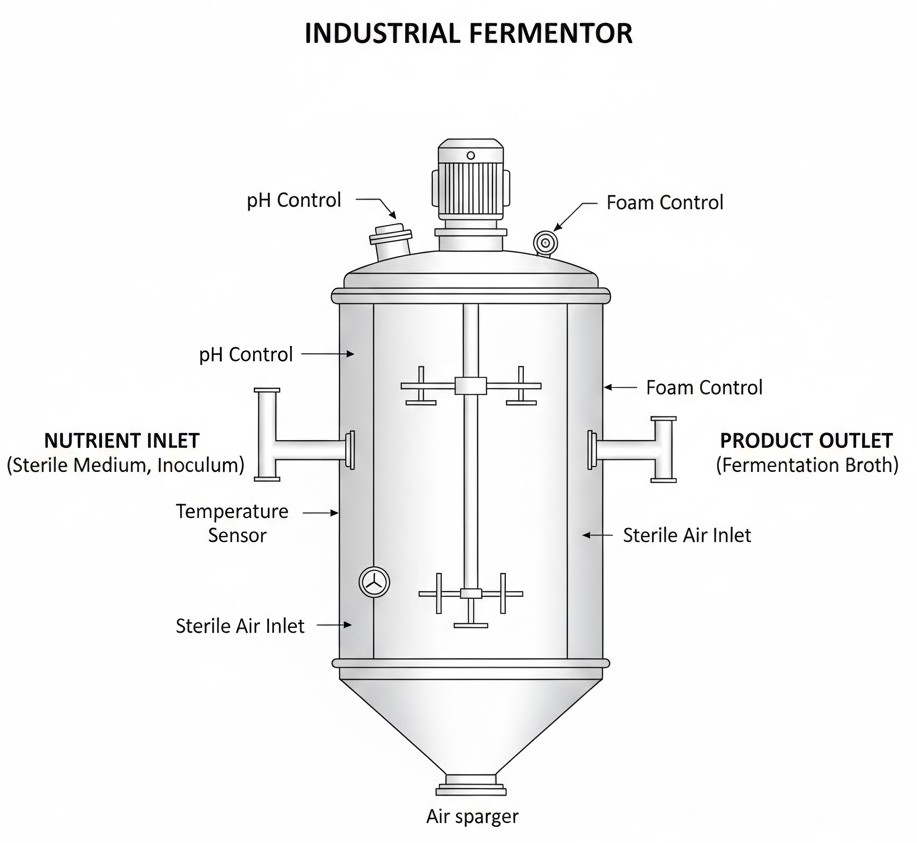
Let’s see how these tiny microbes are actually big-time industrial workers! To produce things at a massive scale, we use giant "buckets" called fermentors.
First up, the party starters: Fermented Beverages. We use Brewer’s yeast (Saccharomyces cerevisiae) to ferment malted cereals and fruit juices into ethanol. Here’s the funda: wine and beer are produced without distillation, while the "hard" stuff like whisky, brandy, and rum are distilled.
NEET Checkpoint:
Which of these is an undistilled beverage?
(a) Whisky
(b) Wine
(c) Brandy
(d) Rum
✅ Answer: (b) Wine — Remember, wine and beer are the "natural" ones without extra processing!
Now, the "Queen of Drugs"—Penicillin. Alexander Fleming discovered it by chance while working on Staphylococci bacteria. He saw a mould, Penicillium notatum, stopping the bacteria from growing. But wait, the full potential was established by Ernest Chain and Howard Florey.
NEET Checkpoint:
Who were awarded the Nobel Prize in 1945 for Penicillin?
(a) Fleming
(b) Chain
(c) Florey
(d) All of these
✅ Answer: (d) All of these — This trio changed medical history during World War II!
Microbes also produce Industrial Chemicals! Think of them as tiny chemical factories:
* Citric acid: Aspergillus niger (a fungus).
* Acetic acid: Acetobacter aceti (a bacterium).
* Butyric acid: Clostridium butylicum (a bacterium).
Figure below:
A clear diagram showing a large industrial fermentor with an inlet for nutrients and an outlet for the fermented product.
Don’t forget the Enzymes! Lipases are used in detergents to remove oily stains (perfect for when you drop samosa oil on your shirt!). Pectinases and Proteases make bottled juices look crystal clear, unlike the thick ones we make at home.
Finally, we have Bioactive Molecules. Cyclosporin A (from the fungus Trichoderma polysporum) is an immunosuppressant for organ-transplant patients. Statins (from the yeast Monascus purpureus) are blood-cholesterol lowering agents.
NEET Checkpoint:
What is the source of Statins?
(a) Bacteria
(b) Virus
(c) Yeast
(d) Protozoa
✅ Answer: (c) Yeast — Specifically Monascus purpureus. It’s a "competitive inhibitor" for cholesterol synthesis!
Practice Question:
Streptokinase, used as a 'clot buster', is obtained from:
(a) Streptococcus
(b) Staphylococcus
(c) Lactobacillus
(d) Saccharomyces
✅ Answer: (a) Streptococcus. It’s used for patients who’ve had a heart attack to clear blood clots.
Key Takeaway
- Brewer's Yeast: Saccharomyces cerevisiae.
- Penicillin: First antibiotic (Penicillium notatum).
- Statins: Cholesterol lowering (Monascus purpureus).
- Cyclosporin A: Immunosuppressant (Trichoderma polysporum).
13. Microbes in Sewage Treatment
Hey junior! Ever wondered where all that city waste goes? It’s not just "out of sight, out of mind"—there’s some serious biology happening at the Sewage Treatment Plant (STP). Let’s clear up this funda before your next mock test!
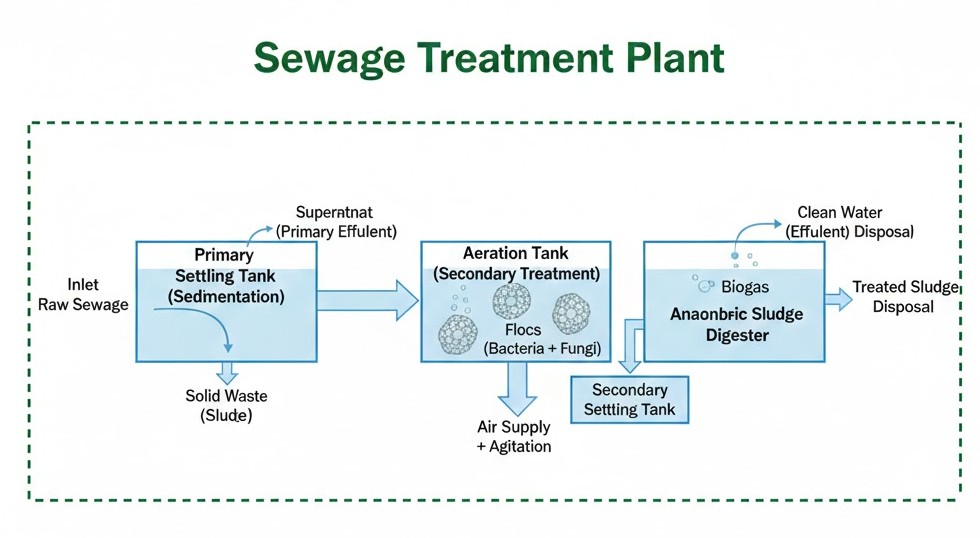
Primary Treatment is basically the "physical" cleanup. Think of it like straining tea leaves. We use sequential filtration to remove floating debris and sedimentation to get rid of grit (soil and pebbles). The solid stuff that settles is primary sludge, and the liquid on top is the effluent.
NEET Checkpoint:
What is removed during the primary treatment of sewage?
(a) Dissolved salts
(b) Stable organic matter
(c) Floating debris and grit
(d) Pathogenic bacteria
✅ Answer: (c) — Primary treatment involves physical removal of particles through filtration and sedimentation.
Next, the effluent enters Secondary (Biological) Treatment. We pump in air so that useful aerobic microbes grow into flocs—mesh-like structures of bacteria and fungal filaments. These microbes are like a hungry "cleaning crew" that eats the organic matter, significantly reducing the Biochemical Oxygen Demand (BOD).
Relatable Example: Imagine a crowded Mumbai local train station. The "organic matter" is the crowd, and the "microbes" are the trains clearing them out. If the station (water) is too crowded (high BOD), it’s a total mess!
BOD is a measure of pollution; the higher the BOD, the more "dirty" the water is. Once the BOD is low, we settle the flocs (now called activated sludge) and send the rest to anaerobic sludge digesters. Here, anaerobic bacteria produce biogas (a mix of $CH_{4}$, $H_{2}S$, and $CO_{2}$), which we can actually use as fuel!
NEET Checkpoint:
High BOD in a water sample indicates that:
(a) Water is pure
(b) Microbes are absent
(c) Water is highly polluted
(d) Dissolved oxygen is very high
✅ Answer: (c) — BOD is an indirect measure of organic matter; greater BOD means higher polluting potential.
To save our holy rivers from becoming giant drains, the Ministry of Environment and Forests initiated the Ganga Action Plan and Yamuna Action Plan to build more STPs across India.
NEET Checkpoint:
In anaerobic sludge digesters, which gas is produced?
(a) $CH_{4}$
(b) $H_{2}S$
(c) $CO_{2}$
(d) All of these
✅ Answer: (d) — Digestion of sludge by anaerobic bacteria produces a mixture of methane, hydrogen sulphide, and carbon dioxide.
Figure below:
A simplified flow chart of a Sewage Treatment Plant showing the Primary Settling Tank, the Aeration Tank with 'flocs' illustrated as mesh structures, and the final Anaerobic Sludge Digester.
Practice Question:
What are 'flocs' in sewage treatment?
(a) Large pieces of grit
(b) Anaerobic bacteria
(c) Masses of aerobic bacteria associated with fungal filaments
(d) Primary sludge
✅ Answer: (c) — Flocs form in the aeration tank and consume organic matter to reduce BOD.
Key Takeaway
- Primary Treatment: Physical (Filtration + Sedimentation).
- Secondary Treatment: Biological (Aerobic flocs reduce BOD).
- BOD: Indirect measure of organic waste; High BOD = High Pollution.
- Biogas: $CH_{4} + H_{2}S + CO_{2}$ produced in anaerobic digesters.
14. Microbes in Energy Generation (Biogas)
Arre junior! Ever noticed those concrete domes in villages and wondered what’s cooking? Literally, it’s Biogas! While we struggle with LPG prices, our rural friends have a "gobar" hack that’s pure gold. Let’s break down how microbes turn waste into fuel.,
Biogas is a mix of gases—mostly methane ($CH_{4}$)—produced by microbial magic. The stars of the show are methanogens, specifically Methanobacterium. These anaerobic fellows don't like oxygen; they thrive in the rumen (stomach) of cattle, helping them digest cellulose. This is why cattle dung, or gobar, is so rich in these bacteria!
NEET Checkpoint:
Which gas is predominantly found in biogas?
(a) $CO_{2}$
(b) $H_{2}$
(c) $CH_{4}$
(d) $O_{2}$
✅ Answer: (c) — Biogas contains predominantly methane produced by methanogens.
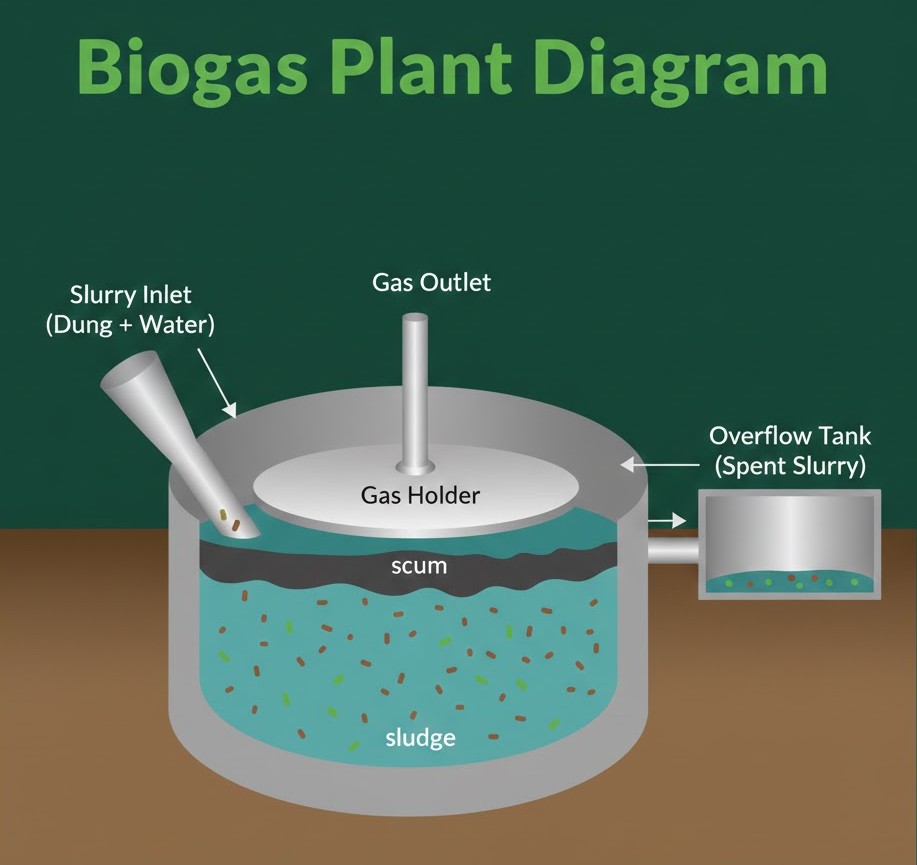
A typical Biogas Plant has a 10–15 feet deep concrete tank. You feed it a slurry of dung and water. A floating cover sits on top—think of it like the whistle on a pressure cooker; it rises as gas builds up! This gas is then piped to houses for cooking and lighting. The leftover "spent slurry" isn't wasted; it's used as a first-class fertiliser.
Relatable Example: It’s like a giant, underground stomach. You feed it "food" (slurry), the microbes digest it, and the gas produced is the "energy" for the village kitchen!
NEET Checkpoint:
Where are methanogens naturally found besides biogas plants?
(a) Human stomach
(b) Rumen of cattle
(c) Aeration tanks
(d) Fruit juices
✅ Answer: (b) — They help cattle break down cellulosic material in the rumen.
This "Made in India" technology didn't happen by accident. It was developed thanks to the Indian Agricultural Research Institute (IARI) and the Khadi and Village Industries Commission (KVIC). Even biology needs a little institutional push, yaar!
NEET Checkpoint:
Which organisations developed biogas technology in India?
(a) ICAR and FRI
(b) IARI and KVIC
(c) NDRI and KVIC
(d) WHO and IARI
✅ Answer: (b) — The IARI and KVIC were the primary drivers.
Figure below:
A cross-section diagram of a biogas plant showing the underground digester tank, the inlet for dung/water slurry, the floating gas holder with an outlet pipe, and the overflow tank for spent slurry.
Practice Question:
What is the role of the "floating cover" in a biogas plant?
(a) To keep the tank cool
(b) To filter the gas
(c) To rise as gas is produced by microbial activity
(d) To pump the slurry
✅ Answer: (c) — The floating cover is placed over the slurry and keeps on rising as gas is produced.
Key Takeaway
- Microbe: Methanobacterium (anaerobic methanogen).
- Input: Cattle dung (gobar) + water slurry.
- Product: Biogas ($CH_{4} + CO_{2} + H_{2}$).
- Pioneers: IARI and KVIC.
15. Microbes as Biocontrol Agents and Biofertilisers
Listen, yaar! Instead of spraying toxic chemicals that pollute our soil and even our favourite sabzi, why not use nature's own police? Biocontrol is a natural alternative to chemical pesticides that relies on natural predation. It’s like hiring a bodyguard for your crops! For example, Ladybirds get rid of aphids, and Dragonflies handle mosquitoes.
NEET Checkpoint:
Which microbe is used to control butterfly caterpillars?
(a) Trichoderma
(b) Glomus
(c) Bacillus thuringiensis
(d) Rhizobium
✅ Answer: (c) Bacillus thuringiensis — Also known as Bt, these bacterial spores are sprayed on plants to kill larvae.
For serious pest management, we use Baculoviruses (specifically the genus Nucleopolyhedrovirus), which are like snipers—they only hit specific insects and don't harm birds or mammals. This is perfect for Integrated Pest Management (IPM). Meanwhile, Trichoderma fungi act as a protective "shield" in the root ecosystem against plant pathogens.
NEET Checkpoint:
Baculoviruses are excellent for narrow-spectrum insecticidal applications.
(a) True
(b) False
✅ Answer: (a) True — They are species-specific and don't harm non-target insects.
Now, let's talk about Biofertilisers. These are organisms that enrich soil nutrients. Rhizobium forms a symbiotic bond with legumes to fix nitrogen, while Azospirillum and Azotobacter do it while living "solo" in the soil.
NEET Checkpoint:
Which fungus helps plants absorb phosphorus?
(a) Nostoc
(b) Glomus
(c) Oscillatoria
(d) Azotobacter
✅ Answer: (b) Glomus — This genus forms Mycorrhiza, helping the plant with phosphorus and drought tolerance.
In paddy fields, Cyanobacteria like Anabaena and Nostoc are the MVPs, adding organic matter and fixing nitrogen for free!
Practice Questions:
1. Which of the following is a free-living nitrogen-fixing bacterium?
(a) Rhizobium
(b) Glomus
(c) Azotobacter
(d) Trichoderma
✅ Answer: (c) — Rhizobium needs a host, but Azotobacter is a free-living fixer.
2. What is the main benefit of Mycorrhiza to a plant?
(a) Produces flowers faster
(b) Enhances nutrient and water absorption
(c) Protects from insects
(d) Makes leaves green
✅ Answer: (b) It absorbs phosphorus from the soil and provides resistance to root-borne pathogens.
Key Takeaway
- Biocontrol: Bt (caterpillars), Trichoderma (roots), Baculoviruses (IPM).
- Biofertilisers: Rhizobium (symbiotic), Azotobacter (free-living), Glomus (phosphorus), Cyanobacteria (paddy fields).